
Case Background
Slade Douglas, a long-term resident of Los Angeles and a military veteran, found himself at the center of a civil rights lawsuit after a welfare check at his home escalated into a forced medical encounter. The events began on August 27, 2019, when Mr. Douglas called a Veterans Administration assistance hotline to discuss discrimination he had been facing. During the call, the operator repeatedly interrupted him, leading a frustrated Mr. Douglas to end the conversation. Following this hang-up, the hotline operator contacted the Los Angeles Police Department (LAPD) to request a welfare check, despite Mr. Douglas never expressing any intent to harm himself.
LAPD Officers Jeffrey Yabana and Jeremy Wheeler arrived at Mr. Douglas's apartment later that day. Upon their arrival, Mr. Douglas welcomed the officers into his home and clearly stated that he was not a danger to himself or anyone else. Although it appeared obvious to any observer that he was not in a state of crisis, the interaction quickly soured. The officers reportedly adopted a condescending tone and began to provoke him, which prompted Mr. Douglas to ask them to leave.
Cause
The situation reached a breaking point when the officers refused to leave the premises. When Mr. Douglas attempted to call 911 to report the officers’ behavior to their supervisors, one of the officers physically snatched the phone from his hand. They immediately placed him under arrest without providing a reason, allegedly mocking him with derogatory terms like "boy" during the process. This arrest occurred despite Mr. Douglas posing no threat and the lack of any legal probable cause for his detention.
Injury
The physical toll of the encounter began during the arrest itself. Despite Mr. Douglas informing the officers of his pre-existing spinal injuries and radiculopathy, they insisted on handcuffing his hands behind his back, claiming it was departmental policy. This led to immediate pain and long-term nerve damage and numbness in his wrist.
The mistreatment continued at Good Samaritan Hospital, where the officers had Mr. Douglas transported against his will. While he was semi-unconscious after being injected with sedatives without his consent, medical staff at the officers' urging performed a forced catheterization to collect toxicology samples. This procedure resulted in a painful wound and a subsequent infection inside his urethra.
Damages Sought
Slade Douglas sought a comprehensive range of damages to address his physical and emotional suffering. His legal team requested general damages for the severe emotional distress caused by the incident. Additionally, he pursued compensatory damages for his physical injuries and economic damages for the financial impact of the events. To hold the individual officers accountable for what he described as malicious and reckless conduct, he also sought punitive damages. Finally, the suit requested the recovery of legal costs, attorney fees, and prejudgment interest.
Key Arguments and Proceedings
Legal Representation
Plaintiff: Slade Douglas.
Counsel for Plaintiff: Paul L. Hoffman | John Washington | Peter Laurence Carr , IV | Lauren Khali McRae | Na'Shaun Neal
Defendant(s): City of Los Angeles | Officer Jeffrey Yabana | Officer Jeremy Wheeler.
Counsel for Defendant(s): Michael N. Feuer | Kathleen A. Kenealy | Scott Marcus | Cory M. Brente | Surekha A. Shepherd | Eric A Schneider | Thomas C. Hurrell | Christina Gasparian | Faraz Kevin Rashidi
Experts : Roger Clark | Daniel Blitch | Ronald S. Kvitne | Richard J. Boxer | Ed Flosi
Key Arguments or Remarks by Counsel
Claims
The Plaintiff’s counsel argued that the LAPD officers had no legal right to arrest or detain Mr. Douglas, as he was clearly not a danger to himself or others during the welfare check. They contended the arrest was a retaliatory act meant to silence him after he tried to report the officers’ harassment. Furthermore, the lawsuit targeted the City of Los Angeles under "Monell" liability, asserting that the LAPD had a widespread custom of making arrests without probable cause and failing to train its officers on how to properly interact with individuals with disabilities or those in a mental health crisis.
Defense
The City of Los Angeles and the individual officers formally denied the majority of the allegations. They argued that the officers' actions were lawful and stayed within the scope of their official duties during what they characterized as a standard welfare check. In their answer, the Defendants claimed they lacked sufficient information to confirm many of the specific details regarding the arrest and the subsequent medical procedures, essentially forcing the Plaintiff to prove every aspect of the case at trial.
Jury Verdict
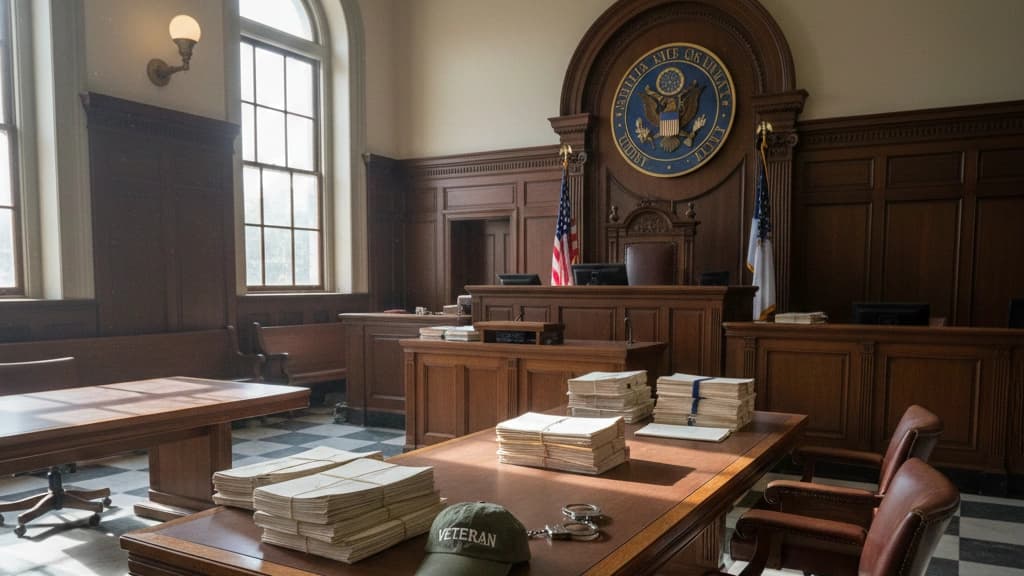
In the civil rights case Slade Douglas v. City of Los Angeles, Officer Yabana, and Officer Wheeler, filed in the United States District Court for the Central District of California, the jury returned a verdict overwhelmingly in favor of the Plaintiff following a trial that took place on December 15, 2025 before the Honorable Maame Ewusi-Mensah Frimpong.
On the First Amendment retaliation claim, the jury found that both Officer Yabana and Officer Wheeler deprived the Plaintiff of his First Amendment rights and that this violation caused the Plaintiff physical, mental, and emotional injury, harm, pain, suffering, and loss of enjoyment of life.
On the Fourth Amendment unreasonable seizure claim, the jury determined that both Officer Yabana and Officer Wheeler did not have probable cause to detain the Plaintiff under Welfare and Institutions Code section 5150, and that this unreasonable seizure caused the Plaintiff physical, mental, and emotional injury, harm, pain, suffering, and loss of enjoyment of life.
On the Fourth Amendment excessive force claim against Officer Wheeler, the jury found in favor of the Defendant, determining that Officer Wheeler did not subject the Plaintiff to excessive force.
On the Fourteenth Amendment due process claim, the jury found in favor of both Officer Yabana and Officer Wheeler, determining that neither officer caused the Plaintiff to suffer a due process violation.
On the Section 1983 claim against the City of Los Angeles, the jury found in favor of the Defendant, determining that the Plaintiff did not prove his claim against the City.
On the ADA violation claim, the jury found that both Officer Yabana and Officer Wheeler failed to provide a reasonable handcuffing accommodation to the Plaintiff.
On the battery claim against Officer Wheeler, the jury found in favor of the Defendant, determining that Officer Wheeler did not commit battery against the Plaintiff.
On the Bane Act violation claim, the jury found in favor of both Officer Yabana and Officer Wheeler, determining that neither officer violated the Bane Act.
On the false imprisonment claim, the jury found that both Officer Yabana and Officer Wheeler subjected the Plaintiff to false imprisonment, and that this false imprisonment was a substantial factor in causing the Plaintiff physical, mental, and emotional injury, harm, pain, suffering, and loss of enjoyment of life.
On the negligence claim, the jury found that both Officer Yabana and Officer Wheeler were negligent, and that their negligence was a substantial factor in causing the Plaintiff physical, mental, and emotional injury, harm, pain, suffering, and loss of enjoyment of life.
On the negligent employment, retention, and supervision claim, the jury found that the City of Los Angeles negligently employed, retained, and supervised Officer Jeremy Wheeler, and that this negligence was a substantial factor in causing the Plaintiff injury, harm, pain, suffering, and loss of enjoyment of life.
On the negligence per se claim, the jury found that the City of Los Angeles violated California Government Code section 1031(f), and that this violation was a substantial factor in causing the Plaintiff injury, harm, pain, suffering, and loss of enjoyment of life.
On the comparative negligence defense, the jury found that the Plaintiff's own negligence did not contribute to his harm.
Regarding compensatory damages, the jury awarded the Plaintiff a total of $6,616,000.00, broken down as follows: $2,000,000.00 for past non-economic loss including physical pain, mental and emotional suffering, and loss of liberty; $89,000.00 for past economic loss including medical expenses; $4,000,000.00 for future non-economic loss including physical pain, mental and emotional suffering; and $527,000.00 for future economic loss including medical expenses.
On the question of punitive damages eligibility, the jury found that Officer Wheeler's conduct was malicious, oppressive, or done with reckless disregard of the Plaintiff's rights. The jury also found that Officer Yabana's conduct was malicious, oppressive, or done with reckless disregard of the Plaintiff's rights. Additionally, the jury found by clear and convincing evidence that both Officer Wheeler and Officer Yabana engaged in conduct with malice, oppression, or fraud.
In the Phase II verdict on punitive damages filed on December 29, 2025, the jury awarded the Plaintiff $58,000.00 in punitive damages against Officer Yabana and $115,000.00 in punitive damages against Officer Wheeler, for a combined total of $173,000.00 in punitive damages.
The total award to the Plaintiff, combining compensatory and punitive damages, amounts to $6,789,000.00. The verdict was signed by the jury foreperson on December 23, 2025.
Court documents are available upon request at [email protected]