

Case Background
Edward Foster sued Royal Caribbean Cruises Ltd. in the United States District Court for the Southern District of Florida, Miami Division. Foster resided in the state of New York. Royal Caribbean was a Liberian corporation that, for purposes of the litigation, operated its principal place of business in Miami, Florida.
Cause
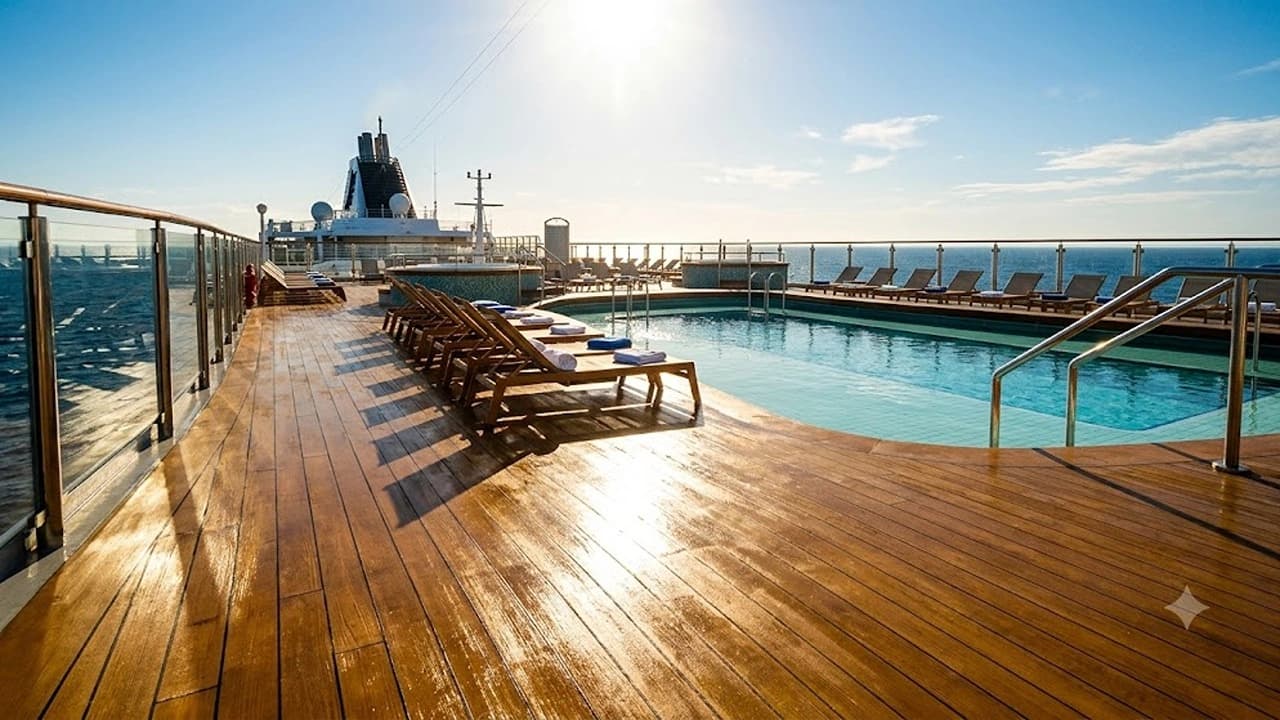
Foster boarded the Grandeur of the Seas on May 7, 2023, during a five-day cruise from Tampa to Yucatan, Cozumel, and Costa Maya. While he spent time on the ship's main pool deck, crew members invited him to join a "Sexiest Man" competition, which began at 1:00 p.m. ship time and was judged by three passengers. Before Foster's turn, another contestant dumped beer on himself and on the deck. Foster removed his shoes to avoid slipping on the wet surface. The crew set up the competition area outside the shaded portion of the deck, in direct sun.
Foster performed before three separate judges. During the first performance, he touched the deck with his hands and knees. The deck felt hot, but he did not realize it was hot enough to cause injury. He stayed on his feet through the second performance and again noticed the heat. He cut the third performance short because of the heat. As he walked back to the shaded area where the other contestants waited, he felt the skin tear from his foot.
When Foster looked down, he saw that both feet were bleeding. The skin had torn completely off his right foot, and his left foot was also severely burned. He asked contest staff for medical help, and staff ignored his request. He then asked other passengers to help him get assistance. After waiting roughly 25 minutes in pain, crew brought him by wheelchair to the ship's medical facility.
Injury
The ship's physician, Dr. Greenidge, diagnosed Foster with second-degree burns to both feet. The ship's Chief Nurse, Mary Gano, told Foster she had treated similar burns from the same deck three or four times before his injury. When Foster asked whether those other passengers' skin had torn away as his had, Nurse Gano confirmed his injury was worse. Foster later spoke with two other passengers on the cruise, identified as Derek Huntley and a minor referred to as "K.," who told him they had also been burned on the ship's hot deck during the same cruise.
Damages Sought
Foster sought compensatory damages exceeding $75,000 on each of three negligence counts, along with prejudgment and post-judgment interest and costs. He also sought punitive damages exceeding $75,000 under a separate count. He demanded a jury trial.
Key Arguments and Proceedings
Legal Representation
Plaintiff: Edward Foster
· Counsel for Plaintiff: Jacob J. Munch | Catherine M. Saylor | William Wilmoth Munch
· Expert for Plaintiff: George W. Melchior
Defendant: Royal Caribbean Cruises Ltd.
· Counsel for Defendant: Bryan E. Probst | Andrew Douglas Craven | Elisha Sullivan | Jaimie Marie Carlson | Kimberly Laura Mason
Key Arguments or Remarks by Counsel
Claims
Foster brought four counts. In the vicarious liability count, he argued Royal Caribbean was responsible for the negligence of the crew members who ran the competition, identified in the complaint as an activities manager believed to be named Carlo and a cruise director believed to be named Neil. Foster argued these crew members failed to inspect the deck for excessive heat before hosting the competition in an unshaded area and failed to warn contestants of the risk.
In the failure-to-warn count, Foster argued Royal Caribbean knew its ship decks could cause severe burns before his injury occurred. He pointed to a July 2014 incident aboard the Celebrity Silhouette, a vessel owned by the same company as the Grandeur of the Seas, in which a passenger named Jeffrey Mizel suffered burns severe enough to require amputation of a toe. Foster's complaint also listed twenty-six other passengers he claimed were burned on Royal Caribbean pool decks across the fleet during the six years before his injury, with the listed incidents dated between 2017 and 2022. Foster argued this history gave Royal Caribbean reason to warn passengers before the competition began.
In the general negligence count, Foster argued Royal Caribbean failed to monitor and maintain the deck, failed to inspect it for dangerous heat, and failed to replace the deck material despite the same history of prior burns. He argued the company should have cooled or shaded the competition area or required contestants to wear shoes.
In the punitive damages count, Foster argued Royal Caribbean's conduct was willful, wanton, and reckless. He argued the company knowingly hosted a barefoot competition on a deck it understood could cause burns, scheduled the event for 1:00 p.m. during peak sun while the ship sailed through the Gulf of Mexico, and gave no warning to contestants despite this knowledge.
Foster maintained the danger was not open and obvious. He stated he touched the deck with his hands, knees, and feet and noticed heat, but did not realize it could cause burns severe enough to tear his skin, particularly since he stood in the sunny area for approximately one and a half minutes.
Defense
Royal Caribbean denied nearly all of Foster's factual allegations. The company admitted it owed passengers a duty of reasonable care under Kermarec v. Compagnie Generale Transatlantique, 358 U.S. 625, 79 S.Ct. 406 (1959). It admitted it may be deemed the operator of the Grandeur of the Seas and did not contest jurisdiction or venue for purposes of the litigation.
Royal Caribbean raised several affirmative defenses. It argued Foster failed to exercise ordinary care to avoid his own injury and that his conduct contributed to what happened. It argued the condition he encountered was open and obvious. It argued it had no prior notice that the deck was dangerous and denied the deck presented any hazard. It argued that if it bore any fault, that fault should be reduced in proportion to Foster's own comparative fault, and it invoked Florida Statutes section 768.81(3) in asking that the verdict form allow the jury to apportion liability among responsible parties. It further argued Foster may have failed to mitigate his damages by not following medical advice or by incurring unnecessary treatment.
Jury Verdict
The jury returned its verdict on July 15, 2026. The jury found that Royal Caribbean acted negligently and that this negligence caused Foster's injury. The jury also found that Foster acted negligently in a way that contributed to his own injury.
The jury apportioned 40 percent of the fault to Foster and 60 percent of the fault to Royal Caribbean.
The jury awarded Foster $10,500 for past medical expenses. It awarded $359,500 for past pain and suffering, disability, physical impairment, disfigurement, mental anguish, inconvenience, and loss of capacity for enjoyment of life. It awarded an additional $1,300,000 for those same categories of harm extending into the future. These amounts combined for total compensatory damages of $1,670,000, calculated without any reduction for Foster's share of fault. The verdict form directed the Court to apply the appropriate reduction based on the jury's 40 percent fault allocation to Foster when entering final judgment.
Court documents are available upon request at [email protected]