
Case Background
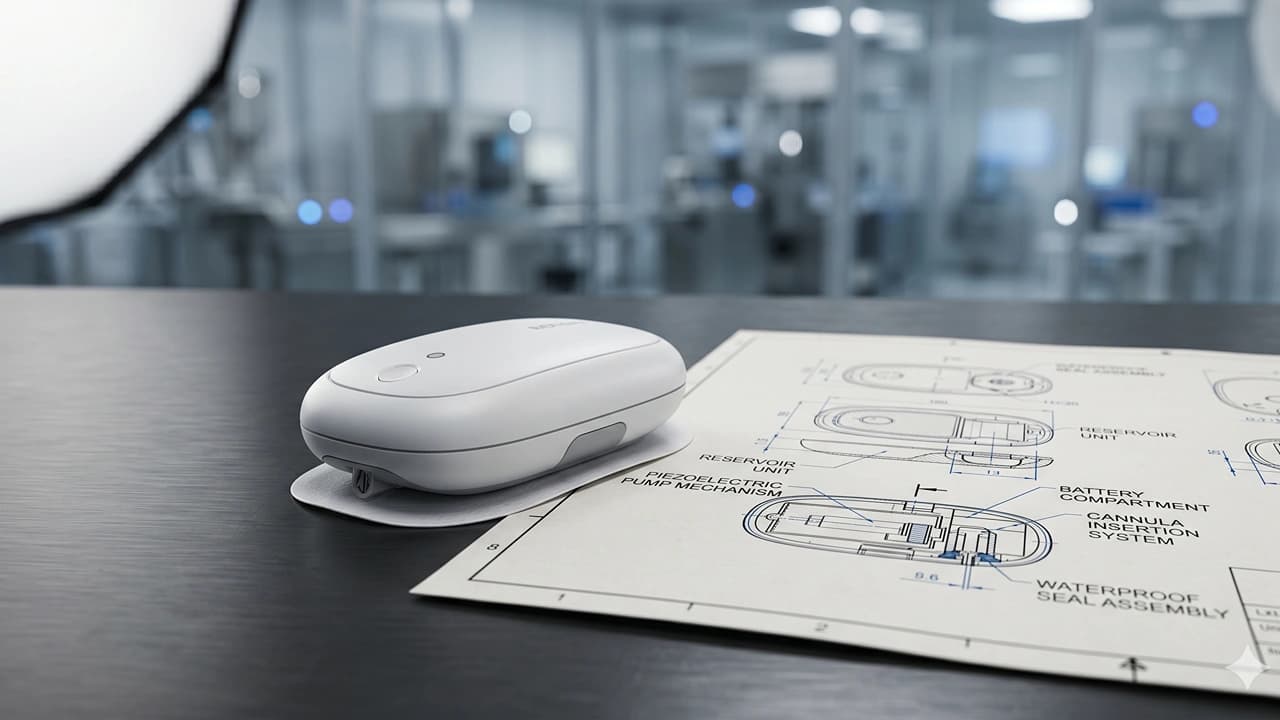
Insulet Corporation, a medical device company based in Acton, Massachusetts, developed and marketed the Omnipod System. This system was the first adhesive, wearable, and disposable insulin patch pump designed for patients with insulin-dependent diabetes. A father who wanted better insulin-delivery options for his son founded Insulet in 2000. Over nearly twenty-five years, Insulet invested hundreds of millions of dollars to research, develop, and refine multiple generations of the tubeless, waterproof pump mechanism and its high-precision manufacturing processes.
Jesse Kim founded EOFlow Co., Ltd. in Seoul, South Korea, in 2011. Initially, EOFlow focused on developing a patch pump that used electro-osmotic pumping technology. Early prototypes of EOFlow's device, called the EOPatch, looked completely different from Insulet’s Omnipod products and ultimately failed to achieve commercial traction. In 2017, EOFlow pivoted away from its original technology and launched a strategy to copy Insulet’s proprietary Omnipod design and replication methods.
To accomplish this, EOFlow recruited and hired several former senior executives and critical engineers from Insulet. Insulet discovered the alleged intellectual property theft in early 2023 after obtaining a sample EOPatch device at a trade show in Berlin, Germany. An internal physical analysis revealed that almost every mechanical component and system within the redesigned EOPatch was virtually identical and interchangeable with the Omnipod system. Insulet filed this federal lawsuit to halt the unauthorized distribution of its technology.
Cause
Insulet brought this action following EOFlow's commercial introduction and planned expansion of the redesigned EOPatch. Insulet asserted that EOFlow built its redesigned product entirely by exploiting stolen technical methodologies and internal corporate knowledge. The shift in EOFlow's product design occurred directly after the company hired former Insulet employees who held detailed knowledge of Insulet's confidential manufacturing, structural engineering, and regulatory strategies. Insulet filed claims for federal trade secret misappropriation under the Defend Trade Secrets Act.
Injury
Insulet suffered immediate and severe competitive harm due to the unauthorized acquisition and use of its core intellectual property. Because EOFlow bypassed the traditional decade-long research cycle, the company managed to produce an identical patch pump in less than four years while spending only a small fraction of the capital that Insulet had historically expended. Furthermore, EOFlow filed multiple patent applications globally that improperly disclosed and claimed Insulet’s proprietary designs as its own inventions. The threat of injury escalated significantly when a major medical device competitor announced its intention to acquire EOFlow, which would result in a full-scale transfer of Insulet's proprietary manufacturing secrets to a company with virtually unlimited commercial resources.
Damages Sought
Insulet requested that the Court award actual financial damages, lost corporate profits, or a reasonable royalty rate for the unauthorized deployment of its technology. Due to the allegedly willful and malicious nature of the misappropriation, Insulet sought compensatory damages alongside punitive and exemplary damages for the economic loss. Insulet also demanded that the Court order a total recall and destruction of all infringing EOPatch units, command the return of all stolen electronic data, and issue preliminary and permanent injunctions to prevent any further domestic or international marketing of the EOPatch platform.
Key Arguments and Proceedings
Legal Representation
Plaintiff(s): Insulet Corporation
· Counsel for Plaintiff(s): Robert D. Carroll | Robert Frederickson III | Scott T. Bluni | Gerard J. Cedrone | Jenny Zhang | Matthew Ginther | Alexandra D. Valenti | James Breen | Timothy Keegan | Alexandra Lu | Arshjit Raince | Danit Maor | William E. Evans
Defendant(s): EOFlow Co., Ltd., EOFlow, Inc., Nephria Bio, Inc., Jesse J. Kim, Steven DiIanni, and Ian G. Welsford
· Counsel for Defendant(s): John C. Bostic | Michael Sheetz | Alexandra Mayhugh | Dustin Knight | Elizabeth M. Flanagan | HanByul Chang | John Wray | Jordan Landers | Kimberley A. Scimeca | Kyung Taeck Minn | Matthew Oliver | Mead Lowell | Reuben H. Chen | Zachary Sisko | Patrick Daniel Curran | Nathaniel Andrew Hamstra | Stacylyn May Doore | William D. Weinreb | Adam S. Gershenson | Hankil Kang | Isabel C. McGrath
Key Arguments or Remarks by Counsel
Claims
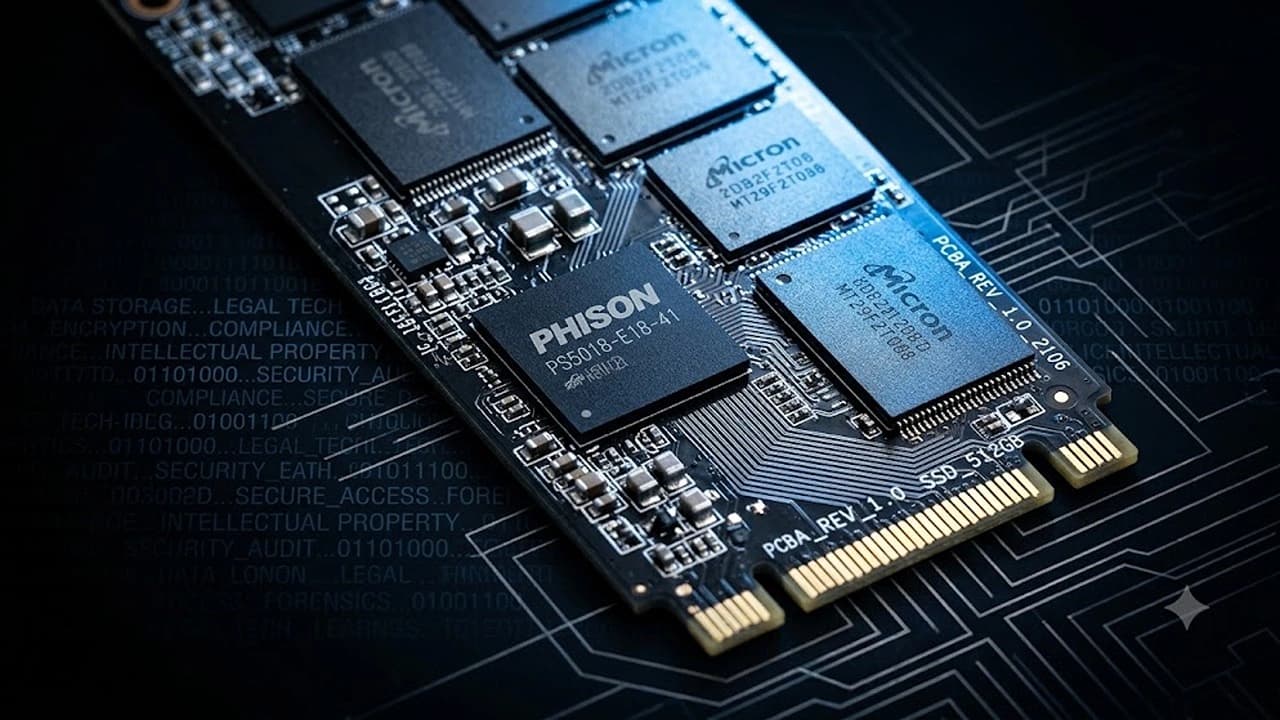
Counsel for Insulet argued that EOFlow orchestrated a systemic corporate espionage campaign designed to strip Insulet of its hard-earned market exclusivity. The legal team presented documentation showing that former employees improperly transferred thousands of highly sensitive files—including Computer-Aided Design files, soft cannula designs, manufacturing specifications, an occlusion detection algorithm, and extensive design history files—directly onto personal storage drives before leaving Insulet.
Insulet's counsel emphasized that while massive global medical device manufacturers repeatedly tried and failed to build scalable patch pumps, EOFlow magically produced a functional clone in under two years for a mere $10 to $15 million. Insulet argued this rapid development was structurally impossible without the wholesale exploitation of Insulet's technical data and "negative know-how," which detailed exactly what engineering techniques had failed during historical testing.
Defense
The individual and corporate Defendants systematically sought to avoid liability by challenging the timeliness of the lawsuit and masking the true origin of their engineering designs. The defense argued that Insulet saw a prototype of EOFlow's patch pump at a trade show as early as 2018. Because Insulet delayed for more than five years before filing suit in August 2023, EOFlow contended that the three-year statute of limitations barred the claims completely. The defense also maintained that early product designs focused strictly on distinct electro-osmotic pumping methods, which represented an entirely independent trajectory of scientific exploration.
Jury Verdict
The matter came before the United States District Court for the District of Massachusetts under Judge F. Dennis Saylor, IV. Following a five-week trial, the jury returned a verdict in favor of Insulet Corporation on December 3, 2024. The jury found that Insulet owned four valid trade secrets—the Computer-Aided Design files, the soft cannula design and manufacturing process, the occlusion detection algorithm, and the design history file—and that the Defendants misappropriated them willfully and maliciously.
The jury rejected the defense's timeline argument and awarded Insulet $170,000,015 in compensatory damages and $282,000,005 in exemplary damages, totaling roughly $452 million. Following post-trial motions, the district Court entered a permanent worldwide injunction prohibiting EOFlow from selling the EOPatch 2. To prevent double recovery alongside the new global sales restriction, the district judge reduced the final award to $25.8 million in compensatory damages and $33.6 million in exemplary damages, making the finalized district Court judgment $59.4 million.
Appellate Findings and Final Disposition
EOFlow appealed the district Court decision to the United States Court of Appeals for the Federal Circuit. On May 28, 2026, the appellate Court completely reversed the judgment of liability and vacated both the $59.4 million financial award and the permanent worldwide injunction.
The Federal Circuit ruled that the jury's verdict regarding the statute of limitations lacked substantial evidence. The Court determined that Insulet knew or should have known enough facts regarding EOFlow's access to former engineers and product similarity to assert its claims long before filing suit.
The appellate Court established that the critical statutory deadline arrived on August 3, 2020, three years before Insulet initiated the litigation. Because all the secrets were shared by the same individuals in the same timeframe for the same commercial venture, the Court rejected a separate timeline for each trade secret. The Court held that the statute of limitations expired for the entire claim, resolving the case entirely in favor of EOFlow.
Court documents are available upon request at [email protected]