
Case Background
Multimedia Technologies Pte. Ltd., a Singapore-based corporation, owned a portfolio of patents related to intelligent television user interfaces and navigation systems. Flextronics International Ltd, which later became Flex Ltd, originally designed these technologies. In January 2012, Flex partnered with the Chinese electronics manufacturer Hisense Group to form a design joint venture called Jamdeo. Jamdeo successfully created a software platform that Hisense integrated into its VIDAA line of smart televisions, which sold millions of units across China. The engineering team at Flex developed a novel user interface method that overlaid menus directly onto the television screen instead of using a standard desktop layout. This breakthrough allowed users to interact with smart television applications smoothly. Flex applied for and obtained dozens of patents protecting these innovations before assigning the portfolio to Multimedia Technologies.
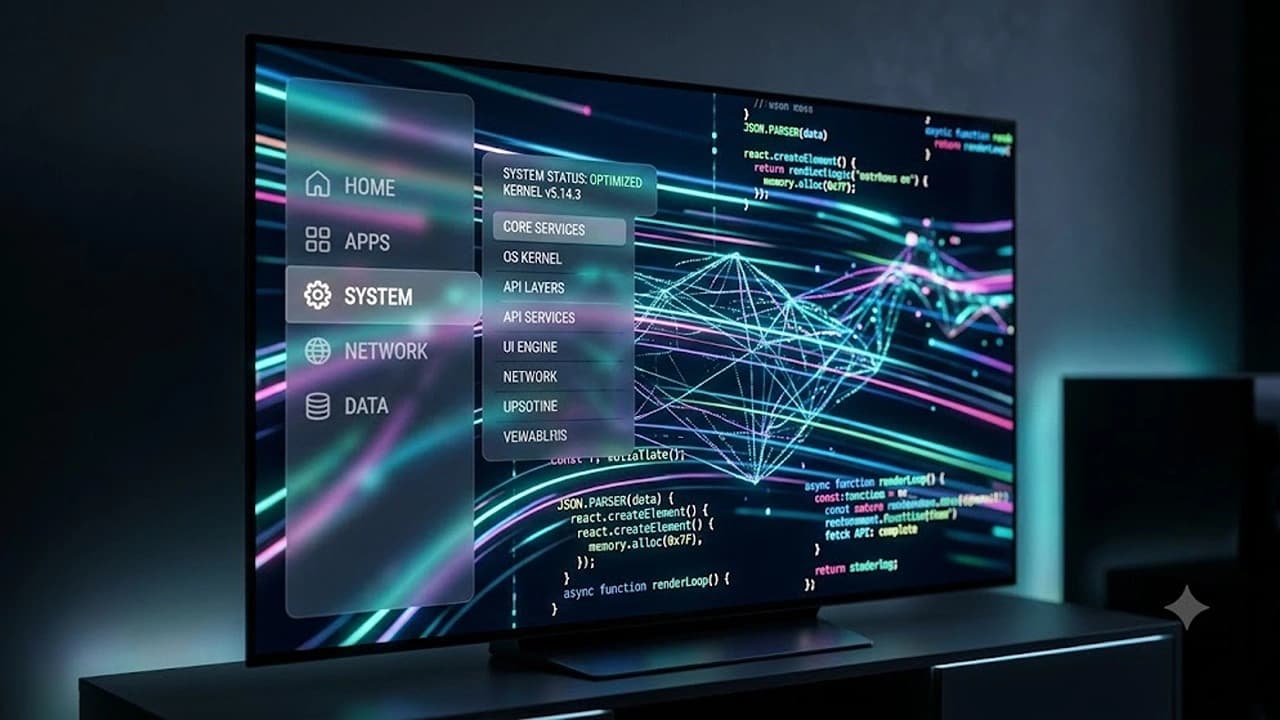
LG Electronics Inc., a South Korean company, and its Delaware-based subsidiary, LG Electronics USA, Inc., mass-marketed smart televisions in the United States. Beginning in 2014, LG installed its webOS operating system across various television lines, including its OLED, QNED MiniLED, NanoCell, and 4K Ultra HD models. Multimedia Technologies discovered that LG had designed its webOS interface to mimic the patented overlay and navigation designs that Flex previously established. Consequently, Multimedia Technologies filed a formal patent infringement lawsuit in the Eastern District of Texas to protect its intellectual property.
Cause
Multimedia Technologies claimed that LG directly and indirectly infringed eleven specific United States patents, which included U.S. Patent Nos. 9,055,254; 9,237,291; 9,232,168; 9,247,174; 9,510,040; 9,578,384; 9,820,003; 10,419,805; 9,426,527; 9,055,255; and 9,185,325. The Plaintiff asserted that LG built the webOS platform around these exact patented methods. According to the complaint, LG actively monitored competitors and cited related Flex patent publications during its own patent applications, meaning the company knew or should have known about the existing protections. By manufacturing, importing, marketing, and selling the webOS-enabled televisions, LG allegedly induced its customers to infringe the patents during normal daily operations.
Injury
Multimedia Technologies alleged that LG caused substantial economic damage to its business operations and devalued its exclusive patent portfolio. The Plaintiff stated that LG gained an unfair market advantage by deploying the patented interface designs without authorization. Multimedia Technologies also argued that LG would continue to cause irreversible harm to its market position unless the Court issued a permanent injunction to halt the ongoing sale and distribution of the infringing smart televisions.
Damages Sought
The Plaintiff demanded that the Court award full compensatory damages to cover all financial losses resulting from the unauthorized use of its technology. Multimedia Technologies also requested pre-judgment and post-judgment interest, along with all associated Court costs. Because the Plaintiff asserted that LG had willfully copied the technology despite knowing about the patent portfolio, it asked the Court to triple the final damages award under federal patent laws. Finally, the Plaintiff requested that the Court declare the case exceptional to force LG to pay all of Multimedia Technologies' legal fees.
Key Arguments and Proceedings
Legal Representation
Plaintiff / Counter Defendant: Multimedia Technologies Pte. Ltd.
Active Counsel: Daniel Apgar | Elizabeth L. DeRieux | Robert S. Pickens | S. Calvin Capshaw III | Timothy Kelso Gilman | Robert Christopher Bunt.
Defendants / Counter Claimants: LG Electronics Inc. and LG Electronics USA, Inc.
Active Counsel: Austin Zuck | Brooke Quesinberry | Collin W. Park | James Travis Underwood | Jason Evan Gettleman | Jason C. White | Melissa Richards Smith | Michael Sikora | Natalie A. Bennett | Nicholas Antonio Restauri | Soojin Youn | Susan Kendall Stradley.
Experts Retained: Ramamirtam Sukumar | Justin Blok | Loren Terveen | Dan Schonfeld | Todd W. Schoettelkotte
Key Arguments or Remarks by Counsel
The legal team for Multimedia Technologies focused heavily on the historical timeline of smart television development. Counsel argued that early smart TV formats were clunky and difficult to navigate until Flex invented the overlay system. They presented evidence showing that LG engineers cited Flex patent documents during their own corporate filings, which proved that LG recognized the value of the technology and willfully integrated it into the webOS platform to stay competitive.
The attorneys representing LG countered by challenging the validity and scope of the patents. They asserted that the features used in the webOS system did not violate any legally protected claims held by Multimedia Technologies. LG's counsel also targeted the jurisdiction of the Texas Court, arguing that the South Korean corporate entity did not carry out direct business inside the state of Texas and should not face a trial there.
Claims
Infringement of the Channel Changing Patent
The Plaintiff argued that LG infringed U.S. Patent No. 9,055,254 by utilizing an on-screen channel selection menu. The patented method describes a system where a television receives a wireless signal from a remote control and displays an interactive grid featuring digits from 0 to 9 along with electronic program guide data. The patent requires specific remote control buttons, including a media center button, an application center button, an application panel button, and a global panel button. Multimedia Technologies claimed that LG's remote control home button and settings options performed these identical tasks. At trial, this claim was represented specifically by Claim 8 of the '254 Patent.
Infringement of the Unified Search System
Multimedia Technologies asserted that LG violated U.S. Patent No. 9,237,291, which covers a comprehensive search tool for smart TVs. The technology opens a dedicated digital communication socket to search both local files and external internet databases simultaneously, allowing a user to select a program and immediately tune the television to that station. The Plaintiff stated that the search menu on the webOS home screen copied this mechanism exactly. (Note: This patent was not presented to the jury at the conclusion of the trial).
Infringement of the Adaptive Menu Formats
The complaint alleged that LG infringed U.S. Patent No. 9,232,168 and U.S. Patent No. 9,247,174, which govern how a TV processor decides to render navigation bars. The system checks the television screen layout to see if a horizontal menu bar fits, and if it does not, the processor alters the user interface device to ensure proper visibility. The Plaintiff stated that LG used this exact software logic to control its application ribbons. At trial, this category was litigated via Claims 10 and 11 of the '174 Patent.
Infringement of the Global Panel Matrix
Multimedia Technologies pursued claims under U.S. Patent No. 9,510,040 and U.S. Patent No. 9,820,003, which detail a global application manager. The system detects what content a user is currently viewing, determines whether it is an application or video-on-demand, and opens an application panel along the display edge that highlights specific content streams like live TV, media centers, or HDMI ports. Multimedia Technologies argued that LG built its main user home screen around this dynamic detection concept. At trial, this was narrowed down specifically to Claim 21 of the '040 Patent.
Infringement of Organized Data Models
The Plaintiff accused LG of violating U.S. Patent No. 10,419,805 by organizing video, program guides, and media subservices into a uniform format before sending the structured information to individual display modules. At trial, this capability was tested via Claim 10 of the '805 Patent.
Infringement of Content Sorting and Translucent Overlays
Multimedia Technologies asserted that LG infringed U.S. Patent No. 9,426,527, U.S. Patent No. 9,055,255, and U.S. Patent No. 9,185,325. These patents cover methods for sorting thumbnail displays using three or more metadata traits, overlaying transparent or translucent application menus over live television broadcasts, and categorizing video histories by watch status. The Plaintiff alleged that LG used these exact visual techniques in its content store and pre-installed application streams. At trial, this domain was narrowed down exclusively to Claim 19 of the '255 Patent.
Defense
LG filed a comprehensive answer denying all allegations of patent infringement. The defense stated that the company had insufficient knowledge to verify Multimedia Technologies' actual ownership of the patents. LG explicitly denied that its webOS products directly or indirectly copied the protected methods.
Additionally, LG contested the Court’s personal jurisdiction over its international branch, LG Electronics Inc., noting that the parent company is situated in Seoul, South Korea, and does not directly commit infringing acts within the state of Texas. While the domestic branch, LG Electronics USA, Inc., admitted that it paid property taxes on an electronics warehouse located in Fort Worth, Texas, the company maintained that its hardware and software designs remained entirely original. LG requested that the Court dismiss the lawsuit entirely and order the Plaintiff to cover all defense expenses.
Jury Verdict
A jury trial commenced in the Eastern District of Texas on May 19, 2025, before United States District Judge Rodney Gilstrap. Following five days of trial proceedings, the jury reached and returned a definitive, unanimous verdict on May 23, 2025, culminating in a total victory for the Defendants.
The jury determined that Multimedia Technologies failed to prove by a preponderance of the evidence that LG infringed any of the five litigated patents. In response to Question No. 1 on the Verdict Form, the jury checked "No," finding that LG did not infringe Claim 8 of the '254 Patent, Claim 10 of the '174 Patent, Claim 11 of the '174 Patent, Claim 21 of the '040 Patent, Claim 10 of the '805 Patent, or Claim 19 of the '255 Patent. Concurrently, in answering Question No. 2, the jury found that LG proved by clear and convincing evidence that every single one of these asserted claims was completely invalid, marking a "Yes" box across all six lines. Because the jury found no infringement and ruled all asserted claims invalid, they did not reach or answer the subsequent interrogatories regarding financial compensation, reasonable royalties, or the structural nature of any damages (lump sum versus running royalties), leaving those fields completely blank and proceeding directly to the final signature page. The absolute finality of the verdict left Multimedia Technologies with zero financial recovery.
Final Judgment
Following the jury's verdict, Judge Rodney Gilstrap entered a Final Judgment on June 11, 2025, officially decreeing that LG did not infringe the asserted claims and that all such claims are legally invalid. The Court ordered that Plaintiff Multimedia Technologies take nothing against LG. Additionally, under Federal Rule of Civil Procedure 54(d), Local Rule CV-54, and 28 U.S.C. § 1920, the Court declared LG to be the prevailing party in the litigation and ordered that LG shall recover its costs from Multimedia Technologies, directing the Defendants to file a formal Bill of Costs. All other pending requests for relief by and between the parties that were not specifically addressed in the judgment were denied.
Court documents are available upon request at [email protected]