

Case Background
SVV Technology Innovations Inc. filed a patent infringement lawsuit against ASUSTeK Computer Inc. on March 24, 2022, in the United States District Court for the Western District of Texas, Waco Division.
SVV Technology Innovations, a California corporation based in Sacramento, was founded in 2000 by Dr. Sergiy Vasylyev, a physicist and inventor with a background in physical sciences and more than 20 years of research experience. The company developed technology solutions in optics, photonics, solar energy, daylighting, and solid-state lighting. ASUSTeK Computer Inc. was a Taiwanese corporation headquartered in Taipei.
Cause
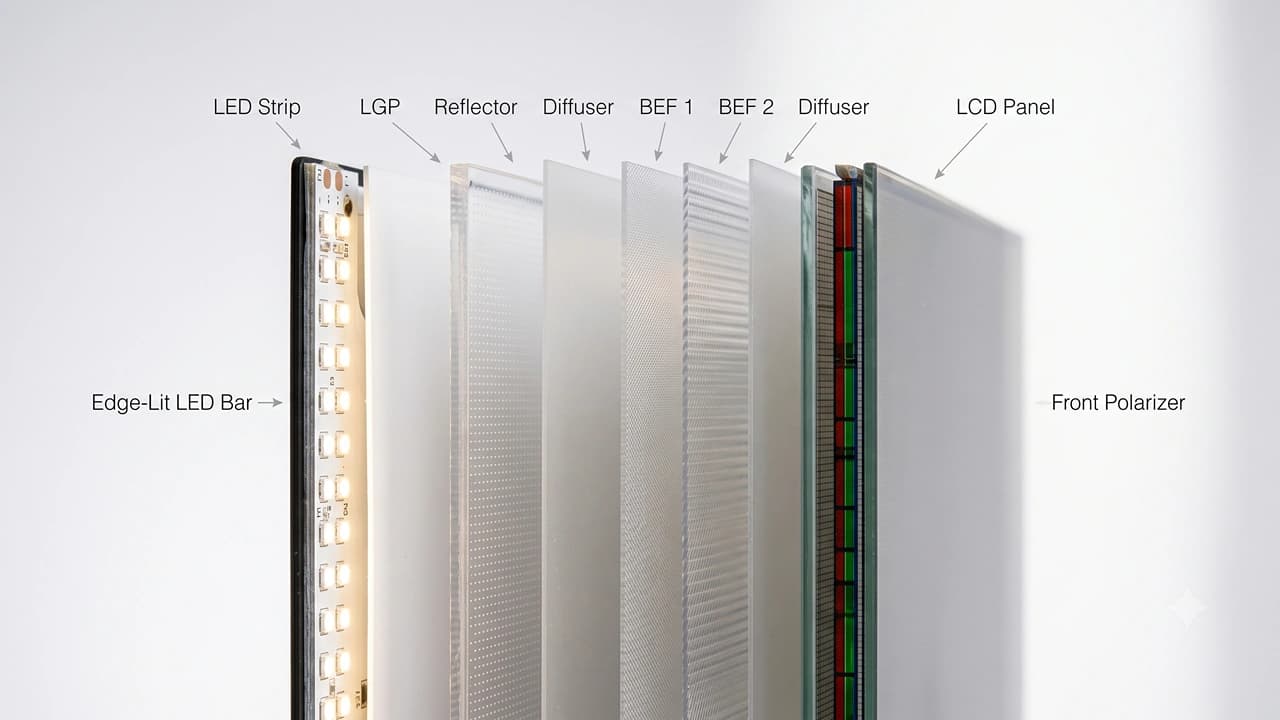
SVV accused ASUSTeK of infringing four U.S. patents related to LED-backlit LCD display technology: U.S. Patent No. 8,290,318 (Light Trapping Optical Cover), U.S. Patent No. 9,880,342 (Collimating Illumination Systems Employing Planar Waveguide), U.S. Patent No. 10,439,089 (Light Converting System Employing Planar Light Trapping and Light Absorbing Structures), and U.S. Patent No. 10,627,562 (Illumination System Using Edge-Lit Waveguide and Microstructured Surfaces).
Injury
SVV alleged that ASUSTeK used its patented display backlight technology in a wide range of ASUS monitors and laptop computers without authorization. The accused products included both monitors and laptops that utilized LED-backlit LCD display panels, some incorporating quantum dot enhancement film layers and others using standard non-QDEF configurations. SVV contended that ASUSTeK received notice of the patents on February 25, 2021, through a letter from SVV's counsel, and continued to sell infringing products.
Damages Sought
SVV sought compensatory damages for past infringement, enhanced damages for willful infringement, supplemental damages for post-verdict infringing sales, an ongoing royalty, prejudgment and post-judgment interest, costs, and attorneys' fees.
Key Arguments and Proceedings
Legal Representation
Plaintiff: SVV Technology Innovations Inc.
· Counsel for Plaintiff: Robert D. Katz | Aisha Mahmood Haley | Bjorn A. Blomquist | Bradley W. Caldwell | Daniel R. Pearson | John Franklin Summers | Robert Seth Reich, Jr. | Warren J. McCarty, III
Defendant: ASUSTeK Computer Inc.
· Counsel for Defendant: Jack Shaw | Robert H. Sloss | Allen F. Gardner | Nickolas R. Apel | Steven A. Maddox | Chris R Schmidt | Craig D. Cherry | Eric A Buresh | Mark D. Siegmund | Michael J Newton | Michelle L. Marriott
Claims
SVV asserted infringement of specific claims across the four patents. For the '342 Patent, SVV asserted claims 1 and 21. For the '562 Patent, it asserted claims 1 and 7. For the '318 Patent, it asserted claim 3. For the '089 Patent, it asserted claim 19. SVV argued that ASUSTeK directly infringed these claims by importing, making, using, selling, and offering for sale the accused monitor and laptop products in the United States.
SVV also alleged that ASUSTeK induced infringement by selling products pre-loaded with infringing functionality and providing instruction manuals and marketing materials that encouraged end users to operate the products in ways that practiced the patented inventions.
SVV further alleged the infringement was willful, contending that ASUSTeK knew about the patents since at least February 2021 and failed to develop any non-infringement theories, attempt design changes, or cease its infringing conduct.
Defense
ASUSTeK denied all allegations of infringement and challenged the validity of the asserted patent claims. In its answer filed on July 15, 2022, ASUSTeK raised six affirmative defenses: failure to state a claim, non-infringement under any theory, invalidity of the asserted claims under multiple provisions of patent law, statutory limitations on damages, waiver and estoppel, and that enhanced damages were not warranted.
ASUSTeK denied that it infringed any valid and enforceable patent claim directly, indirectly, willfully, or under the doctrine of equivalents. The company also contested the accuracy of SVV's characterizations of the accused products and their technical features.
Jury Verdict
The case proceeded to a jury trial, and on September 26, 2024, the jury returned a unanimous verdict in favor of SVV on all counts.
On the question of direct infringement, the jury found that SVV proved by a preponderance of the evidence that ASUSTeK infringed claims 1 and 21 of the '342 Patent, claims 1 and 7 of the '562 Patent, claim 3 of the '318 Patent, and claim 19 of the '089 Patent. The jury also found that ASUSTeK induced infringement of all six asserted claims across the four patents.
The jury determined that ASUSTeK willfully infringed the asserted claims. On damages, the jury awarded SVV $22,434,055 in compensatory damages. The Court also granted a directed verdict on validity, confirming that the asserted claims were not invalid.
Judgment
Following the verdict, both parties filed post-judgment motions. ASUSTeK moved for judgment as a matter of law and a new trial, and separately moved to vacate the judgment. SVV moved for enhanced damages and for supplemental damages and ongoing royalties. The Court addressed these motions in a memorandum and order issued on April 6, 2026.
On June 9, 2026, Judge Albright entered an amended final judgment. The Court awarded SVV the full $22,434,055 jury verdict and doubled it by awarding an additional $22,434,055 in enhanced damages based on the willfulness finding.
The Court also awarded SVV $220,467 in supplemental damages for ASUSTeK's infringing sales between September 24 and October 15, 2024, calculated at a royalty rate of $5.34 per unit. SVV received $2,311,296 in prejudgment interest, computed at the one-year Treasury bill rate and compounded annually. The Court awarded SVV $144,669.17 in costs as the prevailing party.
For ongoing royalties, the Court set a rate of $5.34 per unit for all accused products found to infringe, running from October 16, 2024, through the expiration of all four patents. For the period from October 16, 2024, through March 31, 2026, ASUSTeK owed $2,309,037 in ongoing royalties. Going forward, ASUSTeK was required to report its unit sales of infringing products to SVV within 30 days of the end of each fiscal quarter.
The Court also ordered post-judgment interest on all awarded amounts under 28 U.S.C. § 1961, calculated at the weekly average one-year constant maturity Treasury yield, with interest accruing from the respective dates each sum was awarded through the date of payment. The Court retained jurisdiction to enforce the ongoing royalty obligations.
Court documents are available upon request at [email protected]