Case Background
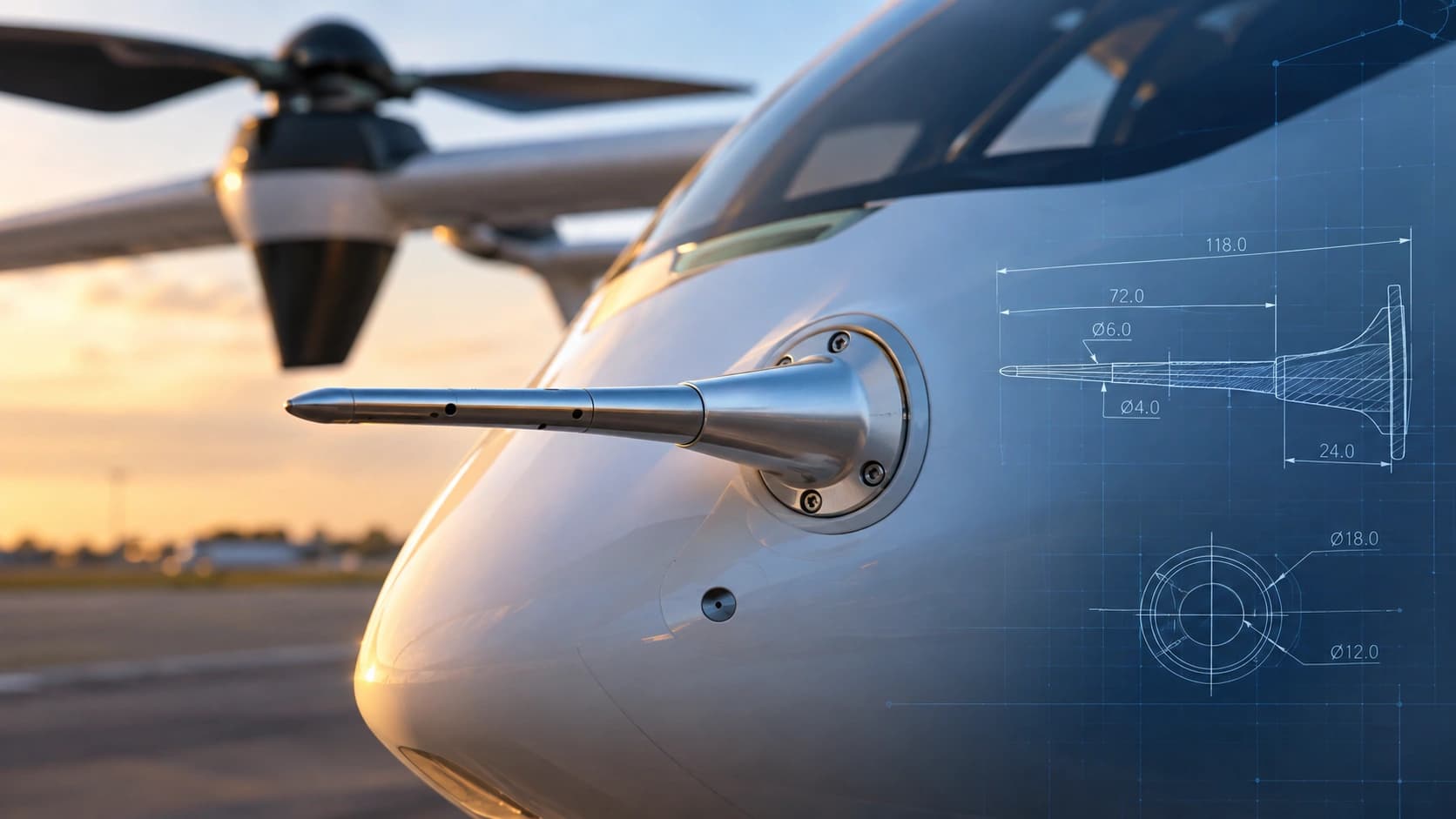
Aerosonic, founded in 1953, makes air data systems, instruments, and probes for military and civil aircraft. Joby Aero, a wholly owned subsidiary of Joby Aviation, Inc., develops electric vertical takeoff and landing aircraft. Aerosonic sued Joby Aviation, Joby Aero, and ten unnamed defendants on March 7, 2025. It filed suit in the U.S. District Court for the Middle District of Florida. On June 10, 2025, the Court dismissed that complaint without prejudice as a shotgun pleading. Aerosonic then filed an amended complaint against Joby Aero alone. The Court later denied Joby’s motion to transfer the case to California and its motion to dismiss. The case went to trial before Judge Virginia M. Hernandez Covington on September 21, 2026. After ten trial days, the jury returned its verdict on October 2, 2026.
Cause
According to the amended complaint, Joby first approached Aerosonic in 2016 about supplying air data parts. Over several years, Aerosonic said it shared engineering drawings, 3D models, test procedures, and wind tunnel data. The parties signed a Mutual Nondisclosure Agreement dated September 21, 2021. Two days later, Joby personnel visited Aerosonic’s Clearwater headquarters for technical discussions. Joby then purchased ten SLZ8400-2 air data probes, delivered in 2022 and 2023.
Aerosonic alleged that Joby asked to buy the intellectual property rights to its probes, and Aerosonic refused. It claimed Joby secretly decided in April 2022 to develop probes in house. Joby continued to request technical information after that decision, the complaint said. In June 2024, Aerosonic said it found a factory video showing a Joby probe interface matching its BB3 probe design. Aerosonic said it demanded the return of its information beginning July 31, 2024. Joby did not return it, according to the complaint.
Injury
Aerosonic alleged that Joby used its information to design, calibrate, test, and manufacture flight-suitable probes in under two years. It claimed that work would otherwise take a decade or more and millions of dollars. Aerosonic said its trade secrets formed the cornerstone of its business and its competitive advantage. It also alleged that Joby’s newer aircraft carried at least fifteen probes, though Aerosonic had delivered only ten.
Damages
Aerosonic sought compensatory damages, including actual losses, unjust enrichment, and royalties. It also requested exemplary damages, attorneys’ fees, costs, and prejudgment interest. The company asked for specific performance and preliminary and permanent injunctions. It further sought seizure of its trade secrets held by Joby. The complaint alleged damages exceeding $100 million.
Key Arguments and Proceedings
Legal Representation
Plaintiff(s): Aerosonic LLC
Counsel for Plaintiff(s): Todd R. Tucker | Allison M. Stevenson | Andrew Alexander | Annabelle Lincoln | Calvin Pasquale Griffith [Terminated: 10/15/2025] | Fritz E. Berckmueller | Joshua A. Friedman | Justin E. White [Terminated: 10/15/2025] | Mark Wallace McDougall | Nicholas Jacob Bagnolo [Terminated: 01/29/2026] | Randall Evan Kay [Terminated: 10/15/2025] | Ronald M. McMillan | Troy A. Fuhrman | Zachary James Hardy [Terminated: 10/15/2025]
Defendant(s): Joby Aviation, Inc. | Joby Aero, Inc.
Counsel for Defendant(s): Hillary Elise Thornton | Jeffrey Arthur Pade | Paul B. Thanasides | Alexa Lowman | David Nabors | David Valente | Derek L. Shaffer | Eric E. Lancaster | John Bash, III | Joseph E. Palys | Josh A. Lopez | Mark T. Smith | Naveen Modi | Richard Rothman | Robert Unikel | Sripriya Narasimhan | Summer Stevens | Vladimir J. Semendyai | Yury Kapgan
Key Arguments or Remarks by Counsel
Claims
Aerosonic asserted two claims against Joby Aero. First, it alleged breach of the nondisclosure agreement. Aerosonic claimed Joby used its Proprietary Information for purposes beyond evaluating a business relationship. It also alleged that Joby copied and reverse engineered that information. Aerosonic further claimed Joby breached the agreement by refusing to return the information on request. Second, Aerosonic alleged misappropriation under the Defend Trade Secrets Act. It claimed the misappropriation was willful and malicious.
Defense
Joby denied breaching the agreement or misappropriating any trade secret. Its affirmative defenses included failure to identify trade secrets with particularity, waiver, estoppel, laches, and unclean hands. Joby also raised the competition privilege, failure to mitigate, and speculative damages. In its counterclaims, Joby said it designed its own probe from published research with outside consultants. It said it used 3D printing to test nine prototypes before reaching a test-ready probe within two years.
Joby counterclaimed against Aerosonic and its parent, TransDigm Group Inc. Against Aerosonic alone, it alleged breach of implied warranties over allegedly defective probes. Joby also claimed Aerosonic breached the agreement by keeping Joby’s information. On December 15, 2025, the Court dismissed three other counterclaims as barred by California’s litigation privilege. Two arose under California’s restraint of trade and unfair competition laws. The third sought a declaration that parts of the agreement were unlawful.
On July 22, 2026, the Court ruled on challenges to eight experts. It partly excluded opinions from Joby’s experts Michael J. Dreikorn, William Kunik, and James Pooley. The Court denied Aerosonic’s challenge to Joby’s expert Paul French. On Joby’s motions, it denied challenges to Dr. Rajan Kumar and James Malackoski. It granted in part Joby’s challenges to Landon Nye and Patrick Moynihan. On August 3, 2026, the Court denied Aerosonic’s partial summary judgment motion. It granted Joby’s motion in part.
Jury Verdict
On the contract claim, the jury found that all 39 items of alleged Proprietary Information qualified under the agreement. It found that Joby breached the agreement for each item. Jurors also found that none of the agreement’s exclusions applied, such as public availability or independent development. The jury awarded Aerosonic $68,626,042 and rejected Joby’s failure-to-mitigate defense.
On the trade secret claim, the jury found that Aerosonic owned 26 trade secrets. It found that each qualified as a trade secret and that Joby misappropriated each one. Jurors awarded $11,584,782 for actual loss and $18,325,634 for unjust enrichment. That produced total compensatory damages of $29,910,416. The jury entered zero as the overlap with the contract award. It found the misappropriation willful and malicious and awarded $18,325,634 in exemplary damages.
The jury rejected Joby’s unclean hands, laches, estoppel, waiver, and in pari delicto defenses. On the counterclaims, jurors found that Aerosonic did not breach the agreement. They also found Aerosonic not liable for breach of implied warranty. The jury awarded Joby nothing. Together, the verdict form’s awards totaled $116,862,092. The verdict form stated the Court would prevent any duplicate recovery for the same harm.
Post-trial Motions
During trial, Joby moved for judgment as a matter of law and renewed that motion on October 2, 2026. Joby argued that Aerosonic offered inconsistent damages theories that risked double recovery. It also argued that a September 24, 2021 agreement superseded the September 21 agreement. Aerosonic filed its own motion on Joby’s counterclaims and affirmative defenses. It argued that Joby offered no evidence that it gave timely notice of any probe defect.
On October 6, 2026, the Court allowed Aerosonic to conditionally proceed on its contract claim under the September 24 agreement. The Court said it would decide the novation issue if Joby raised it after trial. On November 2, 2026, the Court refused to let Joby file separate post-trial motions or exceed page limits. It kept its trial ruling requiring a single motion. The same day, Aerosonic asked to file a motion for injunctive and other equitable relief under seal. The Court granted that request on November 3. The docket reviewed showed no final judgment.
Court Documents:
Documents are available for purchase upon request at [email protected]