
Case Background
NEC Corporation is a Japanese technology company based in Tokyo. According to its First Amended Complaint, NEC developed biometric recognition, video analytics, and AI camera systems. NEC filed suit on September 3, 2024, in the U.S. District Court for the Eastern District of Texas. The Defendants were Anker Innovations Technology Co., Ltd., a Chinese company, and Anker Innovations Ltd., a Hong Kong company. NEC alleged that Anker sold security products in the United States under the "eufy" brand. District Judge Rodney Gilstrap presided over the case.
Cause
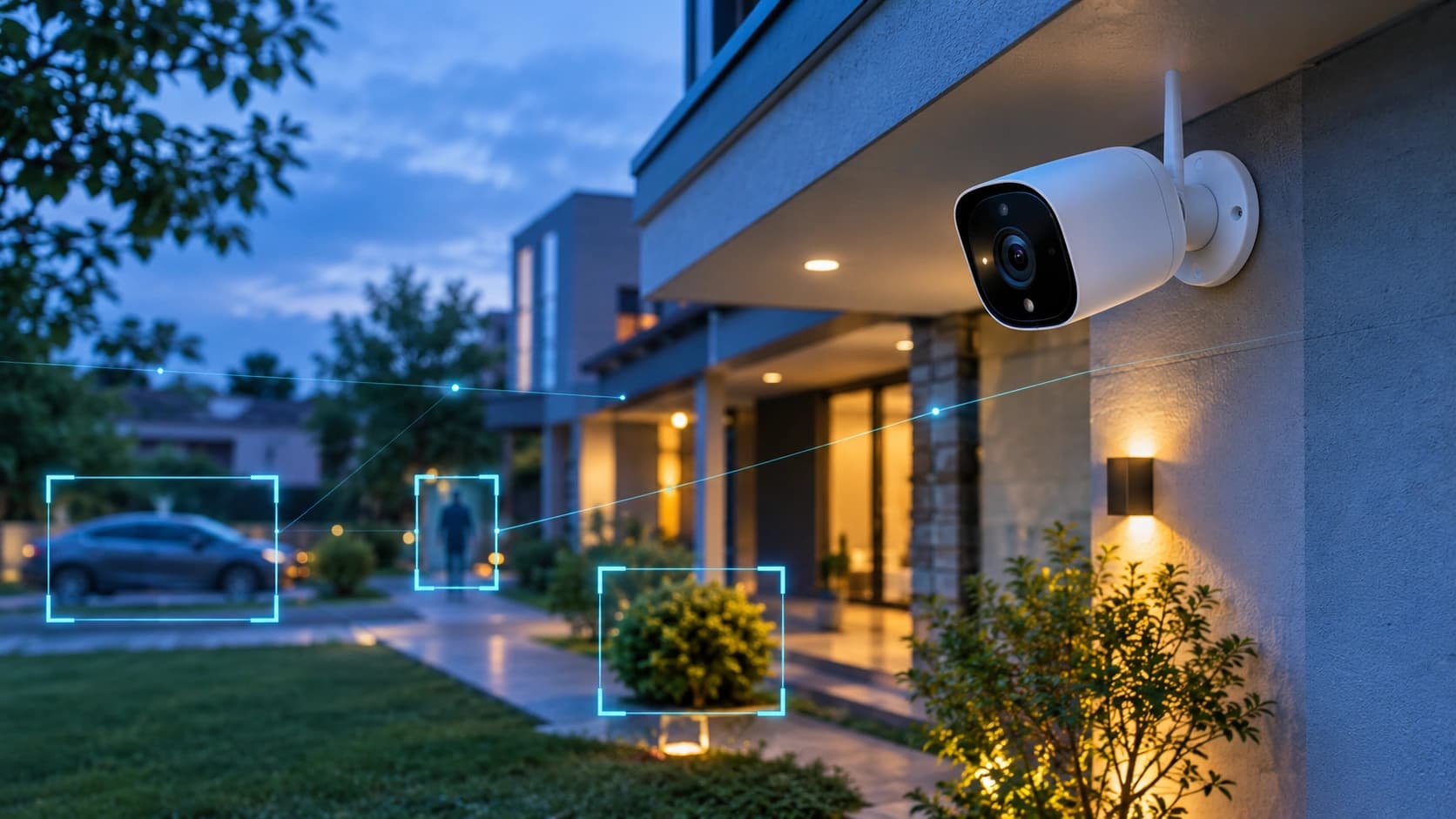
The dispute centered on six NEC patents covering image processing and video surveillance. NEC alleged that eufy cameras, video doorbells, and the HomeBase S380 used its patented technology. It also accused the eufy Security app, the BionicMind AI service, and supporting servers.
According to the complaint, NEC sent a letter to both Defendants' legal departments on June 3, 2024. The letter offered to license five of the patents later asserted. It also identified specific eufy products that NEC believed the patents covered.
Injury
NEC alleged that Anker never engaged in licensing discussions after receiving the letter. It claimed Anker continued to operate without a license to NEC's patents. NEC also alleged that Anker acted through two subsidiaries: Fantasia Trading, LLC, known as AnkerDirect, and Power Mobile Life, LLC. According to NEC, Anker directed and controlled those subsidiaries and should answer for their sales and imports.
Damages
NEC sought damages adequate to compensate it for past and continuing infringement. It also requested interest, costs, and an accounting. NEC asked the Court to find the infringement willful and to enhance damages under 35 U.S.C. § 284. It further sought an exceptional case finding and attorneys' fees. The complaint did not state a specific dollar amount.
Key Arguments and Proceedings
Legal Representation
Plaintiff(s): NEC Corporation
Counsel for Plaintiff(s): Saqib Javaid Siddiqui | Alison T. Gelsleichter | Amanda S. Bonner | Bryan Christopher Nese | Cliff Allan Maier | Courtney M. Krawice | Geoffrey Patton Culbertson | Jamie B. Beaber | Jasjit S. Vidwan | Julia Haines | Kelly B. Tidwell | Robert Gary Pluta | Seke Gnahoua Godo | Seth Weston Bruneel | So Ra Ko | Tariq Javed | Tatsuya Koyama | Tiffany A. Miller | William Brady Nash
Defendant(s): Anker Innovations Technology Co., Ltd. | Anker Innovations Ltd., doing business as eufy
Counsel for Defendant(s): T. Vann Pearce, Jr. | Christopher James Higgins | Eric Hugh Findlay | Gerald Eames Porter [Terminated: 09/02/2026] | John T. Augelli | Pengweixi Sun | Thomas Alden James | Vivian Chew Keller | Yufeng Ma
Key Arguments or Remarks by Counsel
Claims
NEC asserted six counts of patent infringement under 35 U.S.C. § 271. The patents were U.S. Patent Nos. 9,953,240; 10,037,467; 10,970,995; 10,999,635; 11,210,526; and 11,537,814. NEC alleged direct infringement, both literally and under the doctrine of equivalents. It also alleged indirect infringement. NEC claimed Anker had notice of five patents since at least June 3, 2024. It claimed notice of the '814 Patent from the filing of the Complaint. NEC also alleged willful infringement.
The case narrowed before trial. Only four claims across three patents went to the jury. These were Claims 1 and 2 of the '467 Patent and Claim 5 of the '635 Patent. The fourth was Claim 1 of the '526 Patent. The '240, '995, and '814 Patents did not appear on the verdict form.
According to NEC, the '467 Patent improved object searches. It did so by selecting a frame that met a preset criterion for each object element. NEC described the '635 Patent as a display system for tracking people across multiple cameras. It said the '526 Patent let operators create new object categories and store learned video data.
Defense
Anker denied infringement in its Answer to the First Amended Complaint. It asserted that every patent was invalid under 35 U.S.C. §§ 101, 102, 103, and 112. Anker denied willful infringement. It argued that the marking statute and other provisions limited NEC's damages. It also raised prosecution history estoppel, ensnarement, and lack of personal jurisdiction.
Anker further argued that NEC sued the wrong companies. It said its U.S. subsidiaries, Fantasia and Power Mobile Life, handled the accused sales and operated the eufy Security app. Anker claimed that venue was improper and that those subsidiaries were necessary parties. It asked the Court to dismiss the case and award attorneys' fees.
Before trial, Anker moved for judgment on the pleadings. It argued that the asserted claims of four patents were ineligible for patent protection. The Court denied that motion on June 3, 2026.
During trial, the Court ordered briefing on whether Claim 5 of the '635 Patent was directed to an abstract idea. Anker argued the claim covered the abstract idea of graphically showing how often a person was assigned to a video. It compared the claimed tabs to a photo album sorted by subject with tabbed dividers. NEC responded that the claim covered an improved graphical user interface for monitoring people across multiple cameras.
In a November 10, 2026 order, the Court held that Claim 5 was not directed to an abstract idea. It found the claim recited a specific user interface that gave each monitored person its own tab. Because of that ruling, the eligibility question for the '635 Patent did not go to the jury.
Jury Verdict
Jury selection and trial began on November 5, 2026. The jury reached its verdict on November 12, 2026. It first returned a verdict form that the Court did not accept. That form listed $4,097,300 in damages for the '526 Patent. The accepted verdict form left that damages line blank.
In the accepted verdict, the jury found that Anker infringed all four asserted claims. It also found that Anker failed to prove any asserted claim invalid. However, the jury found that the elements of Claim 1 of the '526 Patent were well understood, routine, and conventional. That finding applied after removing the abstract idea of labeling data to train a machine learning model.
The jury awarded NEC $14,603,700 for infringement of the '467 Patent. It awarded $5,510,700 for infringement of the '635 Patent. The jury identified the total award as a running royalty. Finally, it found that NEC had not proven willful infringement.
Judge Gilstrap signed the Judgment on November 12, 2026. The Court held that Claim 1 of the '526 Patent was ineligible for patent protection under 35 U.S.C. § 101. For that reason, the Judgment noted that no damages were awarded on that claim.
The Court awarded NEC a reasonable royalty totaling $20,114,400, in the form of a running royalty. It also awarded prejudgment interest at the five-year U.S. Treasury Bill rate, compounded monthly. Post-judgment interest runs at the statutory rate until the Judgment is paid. Because the jury found no willfulness, the Court declined to enhance damages. The Court named NEC the prevailing party and directed it to file a bill of costs. It denied all other pending requests for relief.
The Court closed the case on November 13, 2026. As of the docket retrieved on November 24, 2026, neither party had filed post-trial motions or a notice of appeal.
Court Documents:
Documents are available for purchase upon request at [email protected]