Case Background
Taction Technology, Inc. sued Apple Inc. on April 26, 2021, in the U.S. District Court for the Southern District of California. Taction described itself as a technology innovator specializing in enhanced haptics for electronic devices. The Complaint described haptics as the science of interacting with technology through touch. Dr. S. James Biggs, the inventor named on both patents at issue, developed a haptic actuator called the Taction Transporter. According to the Complaint, Taction launched its own Kannon headphones on Kickstarter and licensed its technology to Corsair.
The case took a long road to trial. On August 11, 2023, the Court granted Apple summary judgment of non-infringement. Taction appealed to the U.S. Court of Appeals for the Federal Circuit. On August 13, 2025, the Federal Circuit vacated that ruling and remanded the case. It found the Court abused its discretion in striking the infringement contentions of Taction’s technical expert, Dr. James H. Oliver. It also held that “highly damped” output did not require mechanical damping or a Q-factor below 1.5. The case reopened in October 2025. Trial began before U.S. District Judge Todd W. Robinson on September 14, 2026.
Cause
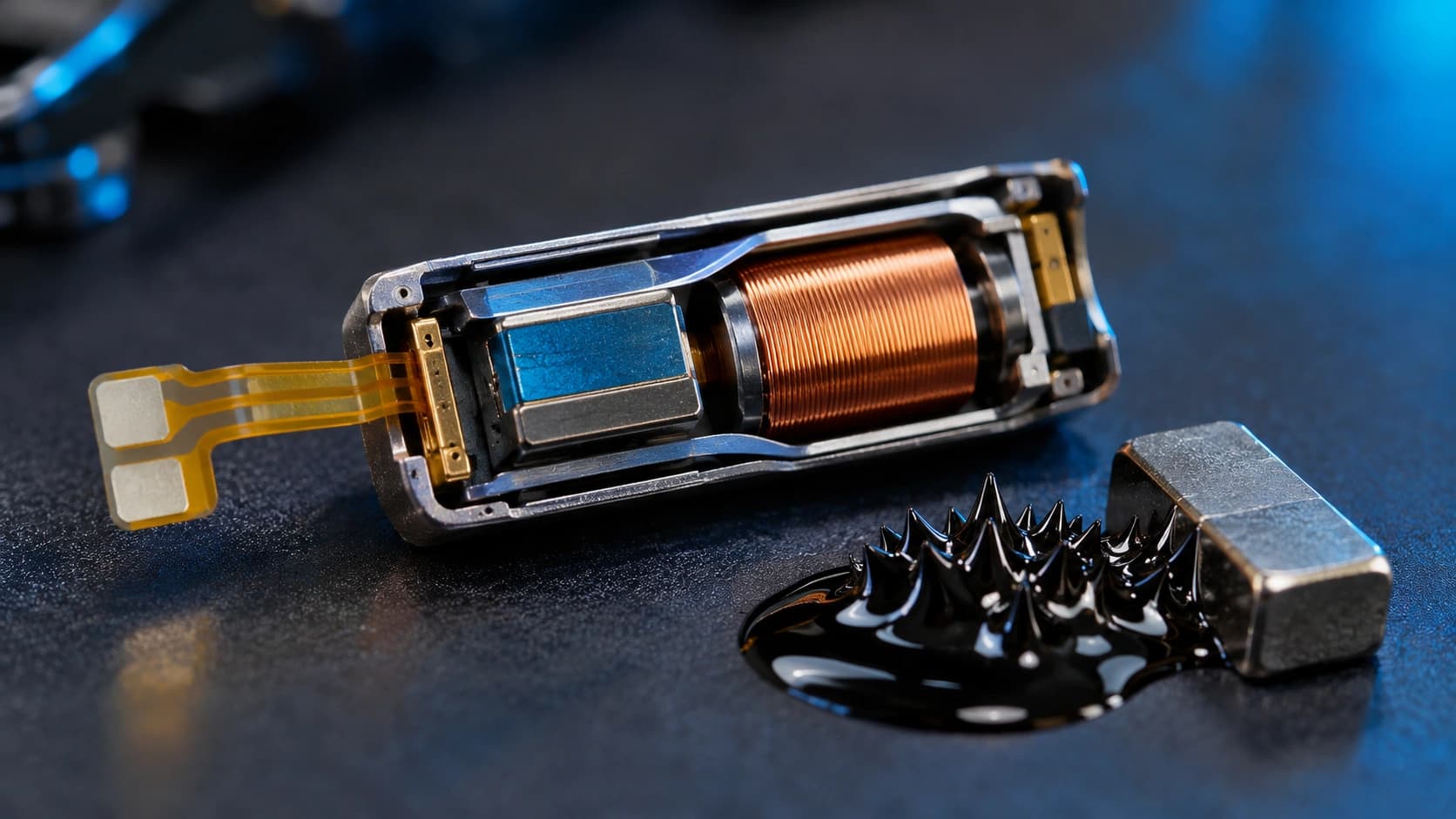
Taction’s claims centered on Apple’s Taptic Engine, the haptic actuator inside many iPhones and Apple Watches. The Complaint alleged that, since late 2016, Taptic Engines used magnetic ferrofluid to damp vibrations of the moving mass. Since that time, Taptic Engines also allegedly used in-plane flexures to locate and suspend that mass. Taction claimed these features practiced its patented designs. The Complaint accused 20 Apple Watch and iPhone models, including the Apple Watch Series 3 and the iPhone 12 Pro Max. By 2026, Taction had added newer models to the case, including the iPhone 17 Pro.
Injury
Taction alleged that Apple used its patented inventions without a license or authority. The Complaint also alleged that Apple knew about Taction’s patents. According to Taction, an Apple program manager ordered two Kannon headsets in April 2017. The headsets shipped to Apple in February 2018. Taction alleged that both headsets and their manuals carried markings for a patent in the same family. Taction claimed that Apple capitalized on its innovation by selling infringing devices.
Damages
Taction sought damages of at least a reasonable royalty, along with the lost profits it allegedly would have made. It asked the Court to enhance those damages based on Apple’s alleged willful infringement. Taction also requested preliminary and permanent injunctions against the accused products. Finally, it sought attorneys’ fees under an exceptional case finding, costs, and prejudgment and postjudgment interest. On January 30, 2026, however, the Court granted Apple summary judgment of no pre-suit damages. It found that Taction had failed to properly mark its patented products.
Key Arguments and Proceedings
Legal Representation
Plaintiff(s): Taction Technology, Inc.
Counsel for Plaintiff(s): David Cooper | John F. Bash | Jonathan S. Tse | Lance Yang | Landon Andrew Smith | Maggie Moriarity Miltko | Nagendra Setty | Pooja Parekh | Razmig Hagop Messerian | Ryan Hudash | Scott L. Watson | Sean S. Pak | Tigran Guledjian | Valerie A. Lozano | Gavin Kenneth Snyder [Terminated: 02/12/2026] | Molly Moore [Terminated: 02/12/2026] | Scott Lamar Cole [Terminated: 02/12/2026] | Thomas D. Pease [Terminated: 07/11/2023]
Defendant(s): Apple Inc.
Counsel for Defendant(s): Alan Littmann | Bethany Marvin Stevens | Christopher Scott Marchese | Elizabeth R. Moulton | Hannah Lynn Cannom | Jacqueline Tio | Jeffrey Todd Quilici | John W. Thornburgh | Joy Backer Kete | Madelyn S. McCormick | Melanie L. Bostwick | Qiuyi Wu | Roger A. Denning | Ryan O’Connor | Seth M. Sproul | Tyler Richard Train | Daniela Glaser [Terminated: 11/03/2025] | Eda Stark [Terminated: 06/15/2023] | Laura E. Powell [Terminated: 06/15/2023]
Key Arguments or Remarks by Counsel
Claims
Taction asserted U.S. Patent Nos. 10,659,885 and 10,820,117. The ’885 patent issued on May 19, 2020, and the ’117 patent issued on October 27, 2020. Taction alleged that Apple directly and indirectly infringed both patents. At trial, Taction asserted claims 17 and 19 of the ’885 patent and claim 16 of the ’117 patent. Taction also pursued its willfulness claim. On September 3, 2026, the Court denied Apple’s motion for summary judgment of no willfulness. It held that Taction did not need to prove egregious conduct.
Defense
Apple denied infringement and asserted that every asserted claim was invalid. It filed counterclaims seeking declarations of non-infringement and invalidity for both patents. In its Answer, Apple asserted affirmative defenses including prosecution history estoppel, failure to mark, and no willfulness. It also asserted that Taction was not entitled to injunctive relief and that the case was not exceptional. Apple further contended that its haptic engine designs, including its use of ferrofluid, predated Taction’s earliest possible priority date.
According to its post-trial motion, Apple argued that its Taptic Engine was fundamentally different from Taction’s technology. The Court’s construction required that “the output of the transducer is highly damped.” According to Apple, its Taptic Engines relied on a resonance peak and lacked a flat frequency response. Apple also argued that most accused products used a single “monolithic magnet.” On January 30, 2026, the Court ruled that those products did not literally infringe. However, it let Taction pursue them under the doctrine of equivalents. The Court also denied Apple summary judgment on its indefiniteness and written description defenses. On damages, Apple argued that Taction never tied any royalty to the value of its patents.
Jury Verdict
Taction rested its case on September 17, 2026. Apple rested on September 22, 2026, and Taction then presented a rebuttal case. On September 23, 2026, both parties moved for judgment as a matter of law under Rule 50(a). The Court took both motions under submission. Seven jurors were present for deliberations, according to the Court’s minute entries.
The jury began deliberating on September 23, 2026, and returned its verdict on September 25, 2026. It found that Taction proved Apple infringed claims 17 and 19 of the ’885 patent. The jury also found that Apple infringed claim 16 of the ’117 patent. It rejected Apple’s invalidity defense for all three claims. However, the jury found that Apple did not willfully infringe either patent. It awarded Taction $5,721,961,750 to compensate for Apple’s infringement. The jury was not polled, according to the Court’s minute entry.
Post-trial Motions
On September 29, 2026, the Court noted that it had not yet entered final judgment. It set an October 16, 2026, deadline for motions under Rules 50(b) and 59.
On October 13, 2026, Apple filed a renewed motion for judgment as a matter of law. Apple sought rulings of no infringement, invalidity, and no damages. Alternatively, it sought a new trial on damages, validity, and infringement. Apple called the award the largest patent verdict in history. It argued that no evidence supported the award after the Court excluded Taction’s damages expert. According to Apple, the Court raised a concern at sidebar before the award was read. It said it was “not sure” the figure on the verdict form was “what the jury meant to convey.”
On October 16, 2026, Taction moved for supplemental damages, an ongoing royalty, and prejudgment and postjudgment interest. Taction stated that Apple’s last sales data ended in March 2026. It sought supplemental damages for sales from March through September 2026, based on the jury’s implied per-unit royalty. Taction also sought an ongoing royalty on U.S. sales through the patents’ expiration on September 24, 2035. It asked the Court to extend that royalty to four Apple products released in September 2026. Those products were the iPhone 18 Pro, iPhone 18 Pro Max, Apple Watch Series 12, and Apple Watch Ultra 4. Taction stated that Dr. Oliver tested them and found they were not colorably different from the infringing products.
Taction requested prejudgment interest at California’s 7% statutory rate from April 26, 2021. It sought postjudgment interest at the federal Treasury-based rate, which it stated was then 4.45%. The proposed royalty rate and interest amounts were redacted in the public filing. Taction opposed Apple’s motion on November 3, 2026. On November 5, 2026, the Court granted a joint motion setting deadlines for reply briefs. The docket showed no ruling on Apple’s or Taction’s post-trial motions as of that date.
Court Documents:
Documents are available for purchase upon request at [email protected]