Case Background
Plaintiff GS Holistic, LLC sued a New York City smoke shop and its owner over an allegedly counterfeit Stündenglass waterpipe. GS filed its Complaint on May 9, 2025, in the U.S. District Court for the Southern District of New York. The Defendants were NYC Smoke Shop & Grocery Corp., which did business as International Smoke Shop, and Abdo M. Saleh.
GS, a Delaware company based in Los Angeles, stated that it owned the federally registered Stündenglass trademarks. According to the Complaint, GS had used the marks in commerce continuously since 2020. The marks covered gravity waterpipes and related accessories. GS alleged that it had spent substantial time and money building consumer recognition of the brand.
The case went to trial before U.S. District Judge Paul A. Engelmayer. A jury returned its verdict on July 1, 2026.
Cause
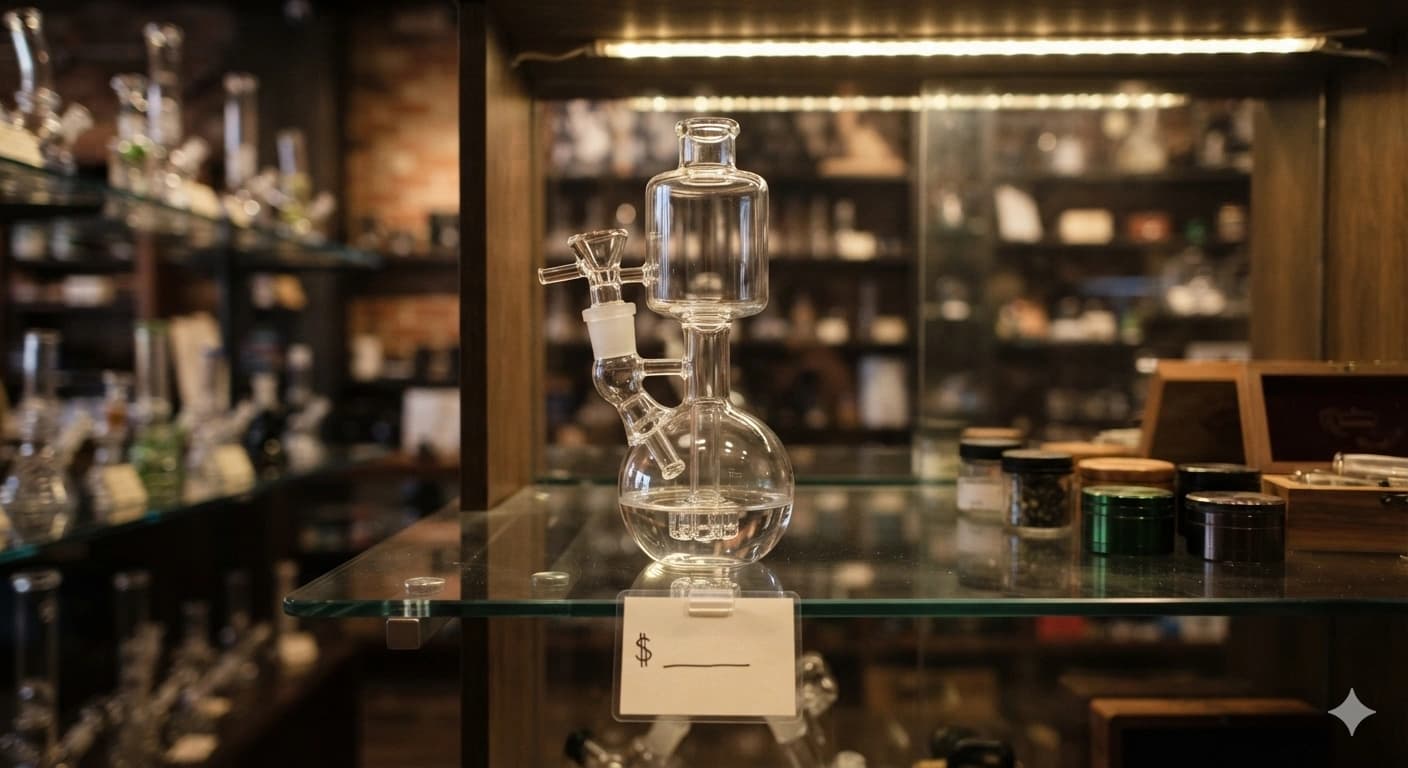
The dispute began with a single store visit. According to the Complaint, a GS investigator visited the shop at 809 8th Avenue on December 16, 2023. The investigator bought a gravity waterpipe bearing Stündenglass marks for $345.
GS alleged that a physical inspection showed the product was counterfeit. The Complaint stated that the waterpipe displayed all four of GS's registered marks. These included the Stündenglass name, an "S" logo and the phrase "Gravity Perfected."
GS pointed to several signs of counterfeiting. According to the Complaint, the product lacked the authentication sticker and serial number found on genuine units. It also came with Pineapple Globes, which GS said it sells separately. GS added that the authentic product retailed for $599.95.
The investigator's worksheet identified the salesperson as Abdul. According to the worksheet, Abdul said the store had sold a lot and this was his last one. He also said he was going to order more.
GS further alleged that Saleh owned and controlled the shop. It claimed that he authorized, directed or participated in the sale.
Injury
GS alleged that the sale caused it financial losses and damaged the goodwill tied to its marks. According to the Complaint, the counterfeit goods were likely to confuse consumers about their source.
GS asserted that the fakes reached the same customers through the same trade channels as genuine products. It also alleged that they were made from inferior or different materials. In addition, GS claimed that buyers of counterfeits did not receive its 10-year warranty, which harmed its public image.
Damages
For its trademark counterfeiting claim, GS sought statutory damages under 15 U.S.C. § 1117(c). It also requested costs and attorneys' fees. GS asked the Court to hold Saleh jointly and severally liable.
For its false designation of origin claim, GS sought disgorgement of profits and treble damages. It also requested prejudgment interest.
In addition, GS asked for an injunction barring further sales of counterfeit Stündenglass products. The requested relief included an accounting, an asset freeze and the destruction of infringing materials.
Key Arguments and Proceedings
Legal Representation
Plaintiff(s): GS Holistic, LLC
Counsel for Plaintiff(s): Eddy Leal | Anthony M. Verna III
Defendant(s): NYC Smoke Shop & Grocery Corp. d/b/a International Smoke Shop | Abdo M. Saleh
Counsel for Defendant(s): Faris S. Hamtini
Key Arguments or Remarks by Counsel
Claims
GS brought two claims under the Lanham Act, the federal trademark statute. First, it alleged trademark counterfeiting and infringement under 15 U.S.C. § 1114. GS claimed that Defendants used marks identical or substantially indistinguishable from its registered marks. It alleged that this use was likely to confuse the public.
Second, GS alleged false designation of origin and unfair competition under 15 U.S.C. § 1125(a). It claimed that the counterfeit marks falsely suggested an affiliation between the shop and GS.
The verdict form addressed only trademark infringement by counterfeiting. It did not include a separate question on the false designation claim.
Defense
Defendants admitted that Saleh owned and operated the shop. They also admitted that they ran a retail smoke shop. However, they denied GS's remaining material allegations. Defendants also denied that GS suffered any damages or was entitled to any relief.
Defendants raised 24 affirmative defenses. These included failure to state a claim, fair use and the first sale doctrine. They also asserted functionality, innocent infringement, statutes of limitations and laches. In addition, Defendants argued that the marks were generic or lacked secondary meaning.
Other defenses included waiver, acquiescence, estoppel and non-infringement. Defendants also cited lack of causation, no damages and unclean hands. They argued that GS faced no irreparable harm and had an adequate remedy at law.
The remaining defenses included failure to mitigate, First Amendment protection and duplicative claims. Defendants also alleged fraud on the U.S. Patent and Trademark Office, abandonment and third-party use. Finally, they cited the actions of others and opposed any punitive damages.
Expert Testimony
GS retained Frank W. McBride, president of the marketing research firm Strategic Advantage, Inc. GS listed two of his reports among its trial exhibits. His September 2023 report found that a counterfeit unit closely resembled the genuine Stündenglass device and packaging.
His January 2024 report described a telephone survey of 51 glass water pipe buyers. According to the report, 88% named Stündenglass as the maker of a pictured counterfeit pipe.
According to Defendants' post-verdict memorandum, McBride testified at trial about consumer perception surveys. The memorandum stated that his opinions addressed the product's characteristics, not Defendants' state of mind.
Jury Verdict
An eight-person jury returned its verdict on July 1, 2026. It found that GS proved trademark infringement by counterfeiting against both NYC Smoke Shop and Saleh.
The jury then addressed willfulness. It found that NYC Smoke Shop's infringement was willful. However, it found that Saleh's infringement was not willful.
The verdict form explained the range of statutory damages. Without willfulness, jurors could award $1,000 to $200,000 per counterfeit mark per type of good. With a willfulness finding, the limit rose to $2 million per mark per type of good. The jury awarded GS $180,000 in statutory damages.
Post-trial Motions
Defendants filed a post-verdict motion on August 3, 2026. They asked the Court to reduce the award through remittitur. They also sought judgment as a matter of law under Rule 50(b). Alternatively, they requested a new trial on damages under Rule 59(a).
Defendants argued that the $180,000 award was excessive. According to their memorandum, the evidence showed only one sale of one product for $345. They also stressed that the business operated a single store.
Defendants further stated that they never received a cease and desist letter before the lawsuit. According to the memorandum, Saleh stopped buying from the wholesaler that supplied the item after being served with the Complaint.
Defendants also challenged the willfulness findings as inconsistent. They argued that the corporation could act only through Saleh. Because the jury found that Saleh did not act willfully, Defendants argued the corporate finding could not stand.
Court Documents:
Documents are available for purchase upon request at [email protected]