

Case Background
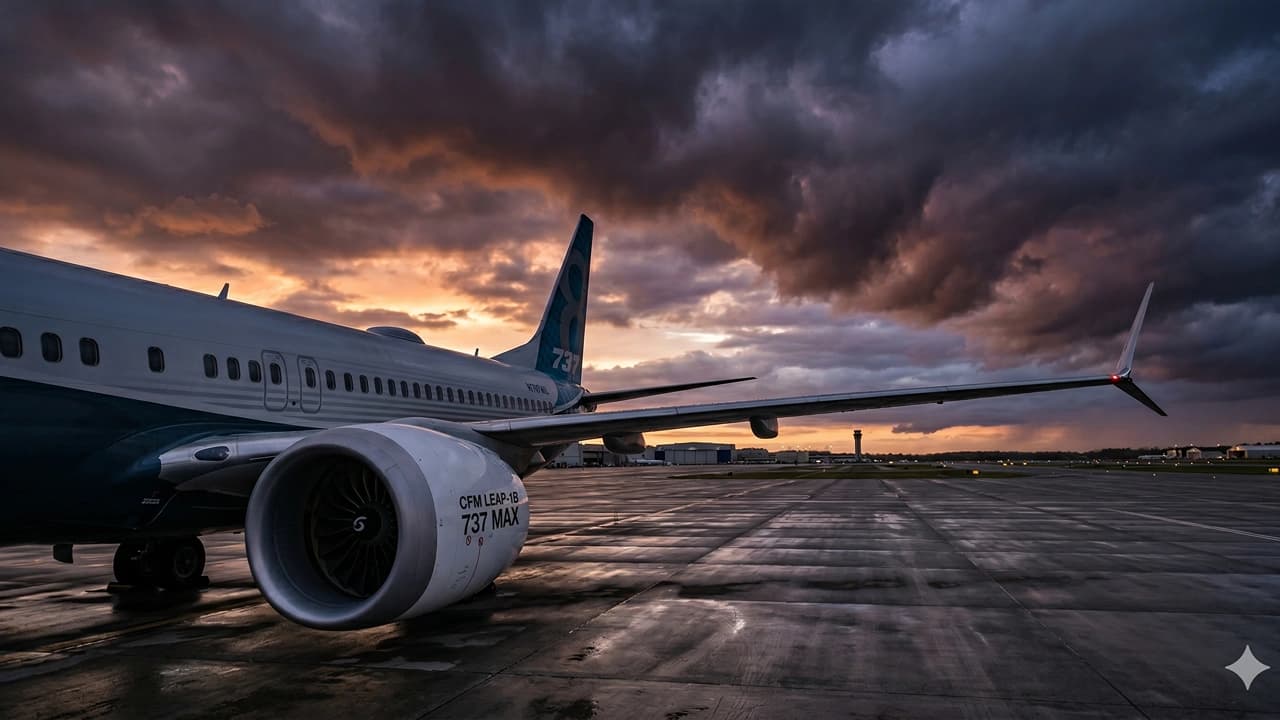
The Polish national airline, Polskie Linie Lotnicze LOT S.A. (LOT), leased a fleet of Boeing 737 MAX aircraft through third-party leasing companies. Boeing had manufactured these jets in Washington state and designed them to compete directly with rival aircraft models. During the development phase, Boeing altered the plane's aerodynamics by installing larger, more fuel-efficient engines higher and further forward on the wings. To address a specific nose-pitching characteristic caused by this physical alteration during high-speed maneuvers, Boeing introduced a flight control software system known as the Maneuvering Characteristics Augmentation System (MCAS).
Following two high-profile, fatal crashes involving 737 MAX 8 aircraft operated by other international airlines in October 2018 and March 2019, aviation regulators globally grounded the fleet. Aviation investigators discovered that both crashes occurred after erroneous data from a single angle-of-attack sensor triggered MCAS, which repeatedly forced the noses of the airplanes downward. The grounding remained in place until aviation authorities lifted the operational restrictions in late 2020 and early 2021 after Boeing implemented system fixes. LOT subsequently filed a lawsuit in federal Court against Boeing to recover financial losses linked to the aircraft.
Cause
The lawsuit arose from allegations that Boeing actively concealed the presence, scope, and operational risks of the MCAS software from aviation regulators and airline customers. Because Boeing wanted to ensure that the 737 MAX did not require expensive, mandatory flight-simulator training for pilots, company representatives successfully lobbied to remove references to MCAS from pilot manuals and training briefs. LOT claimed that Boeing made false statements and omitted critical safety information during sales presentations and contractual discussions, which induced the airline into leasing multiple 737 MAX planes.
Injury
LOT suffered substantial financial harm because of the global grounding of the 737 MAX fleet. The airline had to halt operations of its existing MAX aircraft, find alternative transportation methods to fulfill its flight schedules, and handle unexpected fleet management challenges while the planes remained legally barred from flying commercial passengers.
Damages Sought
LOT sought to recover extensive financial damages from Boeing to cover the following categories:
Additional maintenance expenses incurred because of the fraud.
Elevated operational costs resulting from the fleet issues.
The direct cost of acquiring and operating substitute aircraft to cover routes.
Lost profits stemming from disrupted operations during the grounding period.
Key Arguments and Proceedings
Legal Representation
Plaintiff(s): Polskie Linie Lotnicze LOT S.A.
· Counsel for Plaintiff(s): Anthony U Battista | Christopher Christensen | Diana Gurfel Shapiro | Evan Kwarta | Lisa Heller | Mary Dow | Thomas Ostendorp | William DE Wolff | Yonatan Spielberg | Mirin E. Park
Defendant(s): The Boeing Company
· Counsel for Defendant(s): Matthew Robert Koerner | Michelle L. Maley | Christopher Martin Ledford | Harry H Schneider, Jr. | Marten N King | Michael Sylvain Paisner | Ulrike Buschbacher Connelly
Key Arguments or Remarks by Counsel
Claims
LOT argued that Boeing engineered a corporate cover-up regarding the true nature of the 737 MAX. The airline's legal position focused on how Boeing sales teams and technical personnel gave detailed presentations in Warsaw and Washington, promising that the MAX was a seamless, safe transition from earlier 737 models. LOT emphasized that Boeing employees knew MCAS could aggressively command a nose-down trim based on a single faulty sensor but intentionally hid this fact from the Federal Aviation Administration (FAA) and international regulators to protect commercial timelines. The airline asserted that it would never have signed the leases for these aircraft if Boeing had disclosed the existence and behavior of MCAS.
Defense
Boeing denied all allegations of fraudulent misrepresentation and concealment. The manufacturer acknowledged that its flight technical pilots had withheld information from the FAA regarding the expanded operational scope of MCAS, and it admitted the accuracy of a deferred prosecution agreement with the Department of Justice. However, Boeing argued that it did not defraud LOT during their specific business interactions. The defense maintained that the 737 MAX met relevant airworthiness standards, that the aerodynamics issues were limited to narrow certification maneuvers outside normal operating envelopes, and that the financial disruptions LOT experienced were not the legal responsibility of the manufacturer.
Jury Verdict
The trial concluded with the submission of a formal verdict form to the jury on 22nd of May 2026, which required them to evaluate the fraud claims under a clear, cogent, and convincing evidence standard. The jury answered the specific questions as follows:
Fraudulent Misrepresentation Claim
The jury determined that LOT did not demonstrate each element of its fraudulent misrepresentation claim against Boeing by clear, cogent, and convincing evidence. The panel marked "No" on the verdict form for this count.
Fraudulent Concealment and Omission Claim
The jury determined that LOT did not demonstrate each element of its fraudulent concealment or omission claim against Boeing by clear, cogent, and convincing evidence. The panel marked "No" on the verdict form for this count.
Leasing Determinations and Financial Damages
Because the template required a finding of liability on at least one fraud claim to proceed, the jury left the remaining sections blank. They did not validate any claims regarding leases signed on September 30, 2016, May 8, 2018, or December 6, 2018. Furthermore, the jury awarded no monetary damages for additional maintenance costs, operational costs, substitute aircraft, or lost profits, leaving the total damages line blank.
The presiding juror signed and dated the final verdict form on May 22, 2026, delivering a complete defense verdict for The Boeing Company.
Court documents are available upon request at [email protected]