
Case Background
David Robertson and Daniel Rodni sued YouTube creator Ryan Upchurch over videos concerning Kiely Rodni’s disappearance and death. Robertson was Kiely’s grandfather, while Rodni was her father. The Plaintiffs filed the original complaint on July 28, 2023. They filed the First Amended Complaint on August 1, 2023.
Kiely Rodni disappeared after a party near Tahoe National Forest on August 6, 2022. Her disappearance received extensive public attention. The Plaintiffs alleged that Upchurch began posting about the case on August 13, 2022.
The case later focused on Upchurch’s statements about the family, a GoFundMe campaign, and Kiely’s identity. The Court determined that the Plaintiffs were private figures. The Court also determined that California substantive law governed the defamation claims.
The jury trial ran from May 12 through May 18, 2026. The trial record included videos, social media posts, medical records, therapy records, investigative materials, and deposition evidence.
Cause
The Plaintiffs alleged that Upchurch published increasingly aggressive theories about Kiely’s disappearance. They alleged that his statements continued after authorities confirmed Kiely’s identity.
On August 28, 2022, Upchurch posted a video questioning whether Kiely existed. He also described the situation as a scam involving GoFundMe money.
On August 29, Upchurch posted another video titled “ZERO proof of Kiely Rodni situation being REAL.” The Plaintiffs alleged that he again described the case as a scam.
Upchurch later posted videos identifying Robertson as Kiely’s grandfather. He also questioned Daniel Rodni’s identity and connection to Kiely. The September 3 video included photographs of Robertson.
The Plaintiffs ultimately limited their defamation claims to four statements. Those statements concerned the alleged GoFundMe scam, “catfishing” deaths, the identity of Kiely’s grandfather, and the identity of Kiely’s father.
Injury
The Plaintiffs alleged that the online statements caused reputational harm, financial losses, humiliation, mental anguish, and emotional distress. They also alleged that both men received therapy for psychological injuries linked to Upchurch’s conduct.
The Plaintiffs alleged that Daniel Rodni faced additional privacy and security concerns. They said Upchurch posted information connected to Rodni and displayed Google Earth material concerning his home. They alleged that Rodni then increased his home security measures.
Robertson also operated Lost Trail Lodge. The Plaintiffs alleged that online attention surrounding the case caused negative reviews and financial losses involving the lodge.
The trial exhibits included Robertson’s therapy progress notes, Rodni’s medical records, and a medical record concerning Robertson. They also included receipts for security equipment and evidence concerning home security investments.
Damages
The Plaintiffs sought compensatory damages available under California law, or alternatively Tennessee law. They sought damages for harm to their reputations, financial losses, and emotional distress. They also sought punitive damages based on what they characterized as Upchurch’s outrageous, intentional, reckless, and conscious-shocking conduct.
The complaint did not specify a dollar amount for the damages sought. It stated that the amount in controversy exceeded $75,000, excluding interest and costs, for purposes of federal diversity jurisdiction.
Key Arguments and Proceedings
Legal Representation
Plaintiff(s): David Robertson | Daniel Rodni
Counsel for Plaintiff(s): Christopher Smith | David Randolph Smith | Dominick R. Smith | David Anthony Smith
Defendant(s): Ryan Upchurch
Counsel for Defendant(s): Dennis G. Disney | Barry Neil Shrum | Cynthia A. Sherwood (Terminated- 09/24/2025) | Austin M. Correll (Terminated-09/24/2025)
Key Arguments or Remarks by Counsel
Claims
The First Amended Complaint pleaded five causes of action. They included defamation, defamation per se, false light invasion of privacy, intentional infliction of emotional distress, and negligent infliction of emotional distress.
The Plaintiffs alleged that the GoFundMe statements accused them of fraud and moral turpitude. They also alleged that the statements falsely portrayed them as people using another identity.
The verdict form addressed defamation per se and intentional infliction of emotional distress. The Judgment later confirmed verdicts for the Plaintiffs on those two claims.
Defense
Upchurch denied that his statements defamed the Plaintiffs. He admitted posting multiple videos but disputed the Plaintiffs’ interpretation of those statements. He also denied causing their alleged damages.
The defense argued that Upchurch was one of many online commentators discussing a matter of public concern. It asserted that other creators also published theories about the disappearance. The defense therefore sought apportionment of any damages among responsible parties.
Upchurch also asserted privileged conduct, protected opinion, fair comment, and common interest privilege. He argued that his statements involved public discussion of the reported disappearance. He further argued that his statements were not provable assertions of fact.
The defense also disputed the alleged connection between Upchurch’s comments and his income. Upchurch acknowledged saying he was making substantial money. He maintained that he referred to music streaming revenue rather than revenue from the Kiely Rodni videos.
Jury Verdict
The jury found Upchurch liable to Daniel Rodni for defamation per se. It awarded Rodni $500,000 in actual damages and $2 million in assumed damages. The jury also found Upchurch liable for intentional infliction of emotional distress. It awarded another $4 million for that claim.
The jury reached the same liability findings for David Robertson. It awarded him $1 million in actual defamation damages, $4 million in assumed damages, and $6 million for intentional infliction of emotional distress.
In the second phase, the jury awarded $250,000 in punitive damages to each Plaintiff. The bifurcated verdict form recorded those amounts on May 18, 2026.
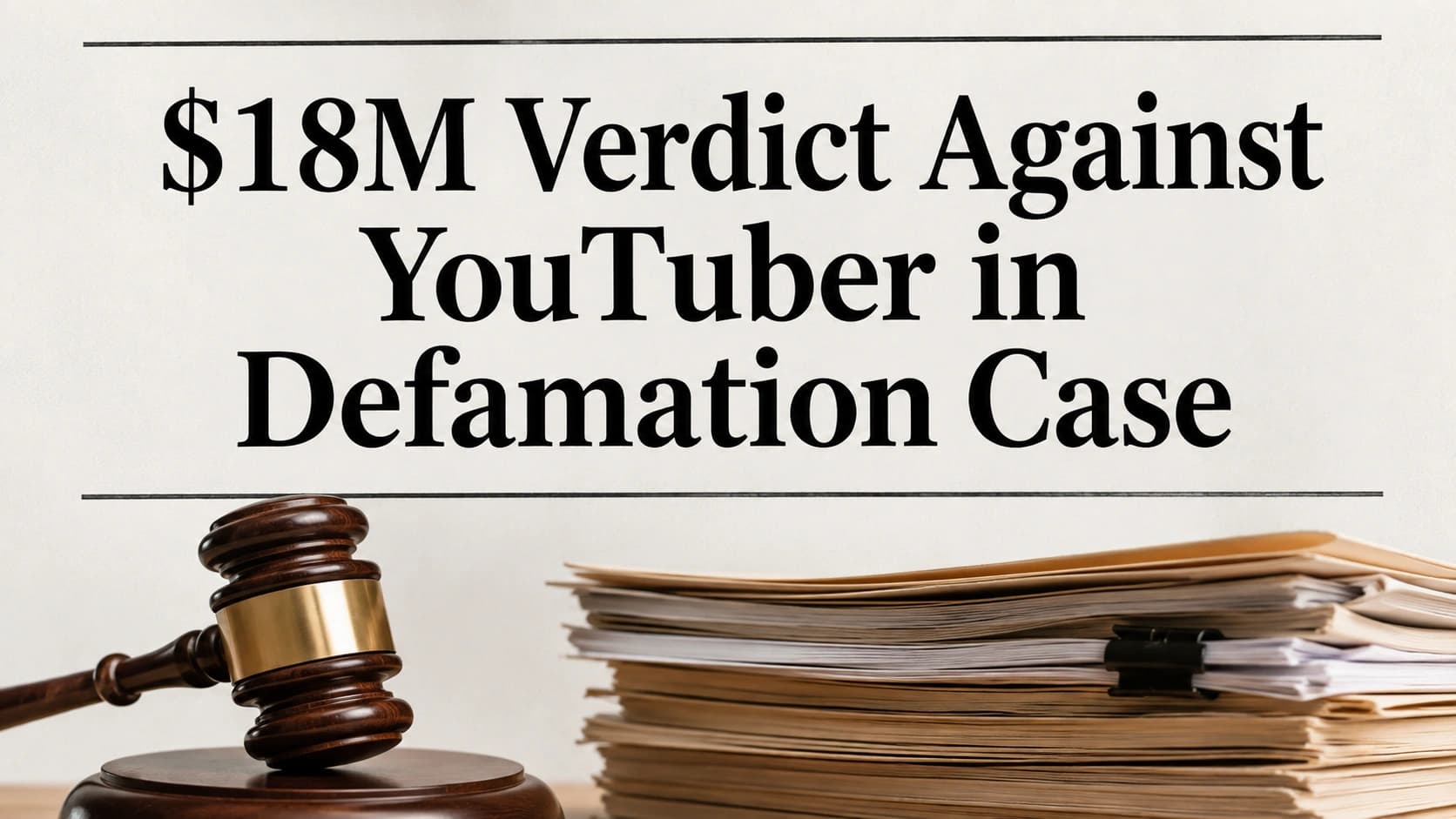
On May 20, 2026, the Court entered judgment for the Plaintiffs. The Judgment awarded $17.5 million in compensatory damages and $500,000 in punitive damages. The total judgment therefore reached $18 million.
Post-trial Motions
On June 17, 2026, Upchurch filed a renewed motion for judgment as a matter of law. He alternatively requested a new trial or remittitur under Rules 50(b) and 59.
The motion argued that the Plaintiffs failed to prove that the challenged statements concerned them. It also argued that the statements constituted protected opinion or hyperbole about a public controversy.
The defense further challenged the jury instructions, the admission of additional videos, and the size of the damages. It argued that the awards duplicated overlapping injuries and exceeded the evidence.
Court Documents:
Documents are available for purchase upon request at [email protected]